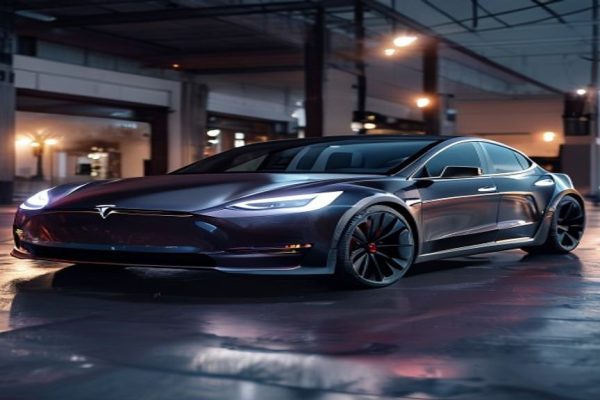
Tesla’s Cheaper Model 2 Revival: A Shift in Strategy?
Elon Musk’s decision to revive the cheaper Tesla Model 2 has sent shockwaves throughout the automotive industry. The original plan to build the $25,000 Model 2 was shelved in 2024, but with the company’s self-driving plans facing significant challenges, it seems that Musk has reassessed the company’s priorities.
Built on the same platform as the Model 3, the Model 2 was intended to be an affordable entry-point into the electric vehicle market. However, with the company’s focus shifting towards autonomous driving, it remains to be seen whether the Model 2 will be able to meet the increasing competition in the budget EV segment.
The Challenge of Autonomous Driving
Tesla’s self-driving plans have been a central focus of the company’s strategy, with Musk aiming to deploy fully autonomous vehicles by 2025. However, the development of Level 5 autonomous driving technology has proven to be far more complex and challenging than initially anticipated.
Several high-profile accidents involving Tesla’s Autopilot system have raised concerns about the safety and reliability of the technology. Furthermore, the lack of a standardized regulatory framework for autonomous vehicles has created significant barriers to deployment.
- Autonomous driving technology has faced significant setbacks and challenges in recent years.
- Regulatory frameworks for autonomous vehicles are still in development, creating uncertainty for the industry.
- Tesla’s Autopilot system has been involved in several high-profile accidents, raising concerns about safety and reliability.
The Revival of the Model 2: A Response to Market Pressure?
The revival of the Model 2 may be a response to market pressure from competitors, such as Hyundai and Kia, which have launched their own budget EVs. With the global EV market expected to reach 14.8 million units by 2025, the pressure to offer affordable and attractive options has never been greater.
However, some analysts argue that the Model 2 may not be the right vehicle to revamp Tesla’s strategy. Instead, the company may need to focus on improving the quality and range of its existing models, such as the Model 3 and the Model Y.
- The global EV market is expected to reach 14.8 million units by 2025.
- Hyundai and Kia have launched their own budget EVs, putting pressure on Tesla to respond.
- The Model 2 may not be the right vehicle to revamp Tesla’s strategy, with some analysts arguing for a focus on existing models.
In conclusion, Elon Musk’s decision to revive the Model 2 is a complex and multifaceted move that reflects the changing landscape of the automotive industry. While the company’s self-driving plans continue to face significant challenges, the revival of the Model 2 may be a necessary response to market pressure and a shift in consumer preferences.
As the industry continues to evolve, one thing is certain: Tesla’s strategy will be closely watched and analyzed by investors, analysts, and competitors alike.






Leave a Reply