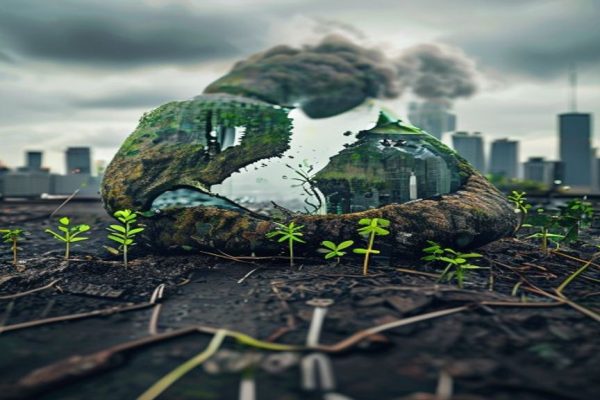
The Climate Change Debt: A Growing Concern
The world’s largest carbon emitters owe a huge debt to future generations, a debt that is not only environmental but also financial. Climate change, driven by human activities such as burning fossil fuels and deforestation, has severe consequences on the planet, including rising sea levels, more frequent natural disasters, and unpredictable weather patterns. The negative impacts of climate change are far-reaching, and some experts argue that the damage can be quantified financially.
Quantifying the Climate Change Debt
Studies have attempted to put a price tag on the climate change debt, and the numbers are staggering. A 2020 report by the Climate Debt Coalition estimated that the world’s largest carbon emitters owe approximately $1.5 trillion to future generations. This amount represents the economic costs of climate change, including damage to infrastructure, loss of productivity, and increased healthcare costs. The report also noted that the costs of climate change are expected to triple by 2050, reaching a total of $4.5 trillion.
The climate change debt is not limited to economic costs. It also includes the loss of biodiversity, the degradation of natural habitats, and the displacement of communities due to climate-related disasters. The Intergovernmental Panel on Climate Change (IPCC) has warned that the consequences of climate change will be catastrophic if left unchecked, with potential losses of up to 10% of global GDP by 2100.
The Consequences of Climate Change: A Global Perspective
Climate change is not just a local issue; it is a global problem that requires a collective response. Rising sea levels threaten coastal cities and low-lying areas, while more frequent natural disasters put pressure on emergency services and economies. The economic costs of climate change are significant, but they are not the only consequence. Climate change also has severe social and environmental impacts, including the loss of cultural heritage, the displacement of communities, and the degradation of natural habitats.
The climate change debt is a reminder that our actions today have consequences for future generations. It is a call to action, urging policymakers, businesses, and individuals to take immediate action to reduce greenhouse gas emissions and transition to renewable energy sources.
The solution to the climate change debt lies in a shift towards sustainable development, including the adoption of renewable energy sources, increased energy efficiency, and the protection of natural habitats. This will require significant investment in research and development, as well as changes to global economic policies and practices.
The clock is ticking, and the window for action is rapidly closing. The climate change debt is a reminder of the urgent need for collective action to address this global crisis. We must work together to reduce greenhouse gas emissions, protect natural habitats, and ensure a sustainable future for all.
- Climate change is a growing concern, with severe consequences for the environment, economies, and human societies.
- The climate change debt can be quantified financially, with estimates ranging from $1.5 trillion to $4.5 trillion.
- The economic costs of climate change are significant, but they are not the only consequence. Climate change also has severe social and environmental impacts.
- The solution to the climate change debt lies in a shift towards sustainable development, including the adoption of renewable energy sources, increased energy efficiency, and the protection of natural habitats.
- Collective action is required to address the climate change debt, including the adoption of global economic policies and practices that prioritize sustainability.
What Can Be Done?
There are many steps that can be taken to address the climate change debt, including:
1. Investing in renewable energy sources, such as solar and wind power, to reduce dependence on fossil fuels.
2. Increasing energy efficiency in buildings and industry to reduce energy consumption.
3. Protecting and restoring natural habitats, such as forests and wetlands, to maintain ecosystem services.
4. Implementing climate-resilient infrastructure, such as sea walls and green roofs, to protect communities from climate-related disasters.
5. Adopting global economic policies and practices that prioritize sustainability, including carbon pricing and green finance.
Conclusion
The climate change debt is a reminder of the urgent need for collective action to address this global crisis. We must work together to reduce greenhouse gas emissions, protect natural habitats, and ensure a sustainable future for all. The solution lies in a shift towards sustainable development, including the adoption of renewable energy sources, increased energy efficiency, and the protection of natural habitats.
The clock is ticking, and the window for action is rapidly closing. We must act now to address the climate change debt and ensure a sustainable future for all.






Leave a Reply