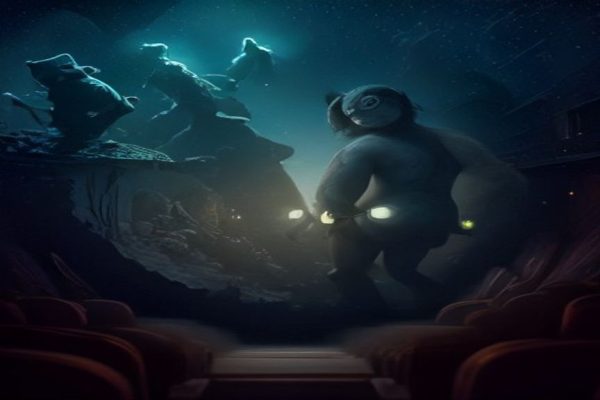
A Legacy of ‘Animation is Cinema’
The statement “animation is cinema” was first uttered by Guillermo del Toro during the 2014 Oscars, where his film ‘The Book of Life’ received an Academy Award nomination for Best Animated Feature. This profound declaration marked a pivotal moment in the animation industry, acknowledging its artistic and cinematic value. Years later, the industry remains a redheaded stepchild of Hollywood, struggling to receive the recognition it deserves.
Industry Background and Context
Animation has a rich history, dating back to the early 20th century with the advent of hand-drawn techniques. However, it wasn’t until the 1990s that computer-generated imagery (CGI) revolutionized the industry, allowing for more complex and visually stunning productions. The rise of CGI led to the creation of blockbuster films such as ‘Toy Story’ (1995) and ‘Shrek’ (2001), which catapulted animation to the forefront of popular culture.
Despite this success, animation remains an underappreciated art form within the Hollywood establishment. Many animators and filmmakers continue to face skepticism and dismissal from their peers, with some even being referred to as “secondary” artists. This perception is not only unfair but also damaging to the industry’s growth and recognition.
The Struggle for Recognition
A recent Variety report highlights the experiences of several professionals in the industry, who share their struggles with recognition and respect. The report reveals that animators are often underpaid, facing long working hours, and lacking the creative control they desire.
The Oscars have been criticized for their handling of animated films, with some arguing that they are relegated to a separate category, diminishing their chances of winning. In recent years, the Academy has attempted to address this issue by introducing rule changes, but the impact remains uncertain.
Key points about the struggles of the animation industry include:
- Underpaid animators: Many professionals in the industry are paid significantly lower than their live-action counterparts.
- Lack of creative control: Animators are often forced to work within strict guidelines, limiting their artistic expression.
- Long working hours: The production process for animated films can be grueling, with some animators working over 12-hour shifts.
- Skepticism from peers: Animators face skepticism and dismissal from their live-action peers, perpetuating the perception that animation is an inferior art form.
The Future of Animation
Despite the struggles, the animation industry continues to evolve and grow. New technologies and techniques are being developed, allowing for even more complex and immersive productions. The rise of streaming services has also opened up new opportunities for animators, providing a platform for diverse and niche content.
The industry’s future depends on the recognition and respect it receives from the Hollywood establishment. By acknowledging the artistic and cinematic value of animation, we can work towards a more inclusive and equitable industry. As Guillermo del Toro stated, “animation is cinema,” and it’s time for the industry to be treated as such.
The animation industry’s struggle for recognition is a complex issue, influenced by historical, cultural, and economic factors. By understanding the past, present, and future of the industry, we can work towards a more inclusive and respectful future for all animators.
This article aims to provide a comprehensive overview of the animation industry’s struggles and evolution. By shedding light on the experiences of professionals in the industry, we hope to spark a conversation about the importance of recognizing and respecting animation as a legitimate art form.






Leave a Reply