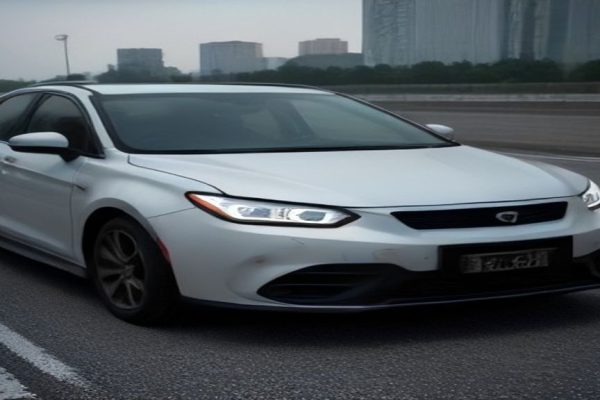
Breaking Down Barriers in Autonomous Driving
The recent discussion between Xinzhou Wu, a prominent figure in the autonomous driving industry, and Nilay Patel, a renowned tech journalist, has sparked significant interest in the development of Chinese cars. The conversation centered around the role of LIDAR (Light Detection and Ranging) technology in achieving autonomy. In this article, we will delve into the importance of LIDAR in autonomous driving, the current state of Chinese cars in this field, and the potential implications for the industry.
The Rise of LIDAR Technology
LIDAR technology has been a crucial component in the development of autonomous vehicles. It uses laser light to create high-resolution 3D models of the environment, enabling vehicles to detect and respond to their surroundings with great accuracy. This technology has been instrumental in the advancement of autonomous driving, particularly in areas such as obstacle detection and avoidance.
However, LIDAR technology has its limitations, primarily related to its high cost and the potential for interference from external factors such as weather conditions. As a result, many companies have been exploring alternative solutions to reduce the reliance on LIDAR. Some have turned to the use of cameras and radar systems, while others have focused on developing more advanced software algorithms to enhance the capabilities of existing sensors.
Chinese Cars Take Center Stage
Chinese car manufacturers have made significant strides in the development of autonomous driving technology. Companies such as Baidu, Geely, and NIO have been actively investing in research and development, with a focus on creating more advanced and efficient autonomous driving systems. These companies have been leveraging the expertise of their engineers, as well as partnering with international companies to stay at the forefront of innovation.
One of the key advantages of Chinese cars is their ability to integrate advanced technologies, such as LIDAR, into their vehicles at a significantly lower cost than their international counterparts. This has enabled Chinese car manufacturers to develop more affordable autonomous vehicles, making them more accessible to the masses.
The Future of Autonomous Driving
As the development of autonomous driving technology continues to advance, it is clear that LIDAR technology will play an increasingly important role. While there are challenges to be addressed, many experts believe that the benefits of LIDAR far outweigh the limitations. In the coming years, we can expect to see significant improvements in the capabilities of autonomous vehicles, particularly in areas such as high-speed highway driving and complex urban environments.
The potential implications of this technology are vast, with the potential to revolutionize the way we travel. Autonomous vehicles could lead to a significant reduction in traffic accidents, improved traffic flow, and enhanced mobility for the elderly and disabled. As Chinese car manufacturers continue to push the boundaries of innovation, it is clear that the future of autonomous driving is looking bright.
In conclusion, the discussion between Xinzhou Wu and Nilay Patel highlights the critical role of LIDAR technology in the development of autonomous driving. Chinese cars are making significant strides in this field, with the potential to revolutionize the way we travel. As the industry continues to evolve, it will be essential to address the challenges associated with LIDAR technology, while also exploring alternative solutions to enhance the capabilities of autonomous vehicles.
As the world becomes increasingly connected, it is clear that the future of transportation will be shaped by the rapid development of autonomous driving technology. With Chinese car manufacturers at the forefront of innovation, it will be exciting to see the impact of this technology on the industry and society as a whole.
Key points to consider:
- LIDAR technology plays a crucial role in the development of autonomous driving.
- Chinese car manufacturers are making significant strides in the development of autonomous driving technology.
- The potential implications of autonomous driving technology are vast, with the potential to revolutionize the way we travel.
- The industry will need to address the challenges associated with LIDAR technology while exploring alternative solutions to enhance the capabilities of autonomous vehicles.
As the industry continues to evolve, it will be essential to stay up-to-date with the latest developments in autonomous driving technology. By understanding the role of LIDAR and the advancements being made by Chinese car manufacturers, we can gain a better understanding of the future of transportation and its potential impact on society.






Leave a Reply