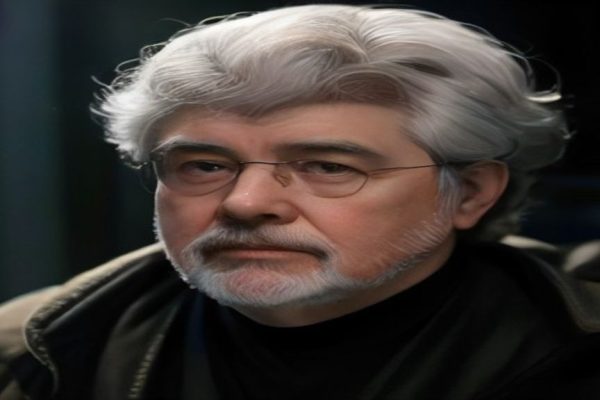
A Legacy of Innovation: George Lucas and the Birth of Star Wars
The name George Lucas has become synonymous with science fiction and blockbuster filmmaking. As a visionary director, producer, and screenwriter, Lucas has left an indelible mark on the entertainment industry. His magnum opus, Star Wars, has been a cultural phenomenon that has captivated audiences worldwide for over four decades. However, few people know about the behind-the-scenes stories of how Lucas brought his iconic vision to life.
According to a recent statement, George Lucas never looks backwards. When he didn’t know how to make a shot he wanted in Star Wars, he invented the technology to do it. When he had a vision for the Star Wars prequels, he waited until the time was right. This innovative approach has been the hallmark of Lucas’s career, and it has inspired countless filmmakers and scientists around the world.
From Modesto to Hollywood: The Early Years of George Lucas
George Lucas was born on May 14, 1944, in Modesto, California. Growing up in a middle-class family, Lucas developed a passion for filmmaking at a young age. He was especially influenced by the works of Akira Kurosawa and Frank Capra, which would later shape his own filmmaking style. After graduating from Modesto High School, Lucas attended Modesto Junior College, where he began making short films.
In 1967, Lucas transferred to the University of Southern California (USC) School of Cinematic Arts, where he met his future collaborator and friend, Steven Spielberg. Together, they made several short films, including “Electronic Labyrinth: THX 1138 4EB,” which would later become the basis for Lucas’s first feature film.
The Making of Star Wars: A Groundbreaking Achievement
The release of Star Wars in 1977 marked a turning point in the history of science fiction. Lucas’s epic space opera, which told the story of a young farm boy who becomes a hero of the Rebel Alliance, captured the imagination of audiences worldwide. The film’s groundbreaking special effects, memorable characters, and iconic score made it a game-changer in the world of filmmaking.
However, Lucas faced numerous challenges during the production of Star Wars. He had to invent new technology to bring his vision to life, including the use of digital compositing and motion control photography. He also had to assemble a talented team of actors, including Mark Hamill, Harrison Ford, and Carrie Fisher, who would become synonymous with the franchise.
The Future of Star Wars: Expansion and Evolution
In 2012, Lucas sold Lucasfilm to The Walt Disney Company, which has since expanded the Star Wars universe through a series of new films, television shows, and other media. The sequel trilogy, which includes The Force Awakens (2015), The Last Jedi (2017), and The Rise of Skywalker (2019), has introduced a new generation of characters, including Rey, Finn, and Kylo Ren.
The future of Star Wars is bright, with several new projects in development, including a new series of television shows and a standalone film focused on the character of Obi-Wan Kenobi. As the franchise continues to evolve, it remains a testament to the innovative spirit and creative vision of George Lucas.
Key Takeaways:
- George Lucas is a visionary director, producer, and screenwriter who has redefined the science fiction genre.
- Lucas’s innovative approach to filmmaking has inspired countless filmmakers and scientists around the world.
- The making of Star Wars involved the development of new technology and the assembly of a talented team of actors and crew members.
- The future of Star Wars is bright, with several new projects in development, including a new series of television shows and a standalone film focused on Obi-Wan Kenobi.
In conclusion, George Lucas’s legacy is a testament to the power of innovation and creative vision. His impact on the entertainment industry will be felt for generations to come.






Leave a Reply