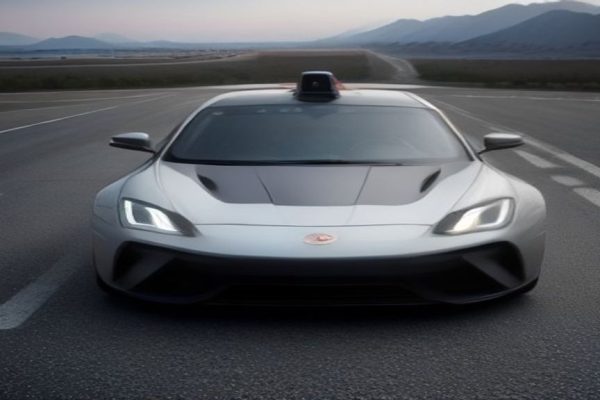
China’s Leap into Autonomous Cars: What’s at Stake?
China, the world’s largest car market, is rapidly emerging as a leader in the development of autonomous vehicles. In a recent interview, Xinzhou Wu, a prominent expert in the field, shared his insights on the prospects of Chinese cars, the role of lidar technology, and the impact of autonomous driving on the industry.
The Rise of Chinese Autonomous Cars
With Chinese companies like Baidu, Geely, and Pony.ai making significant strides in autonomous driving, it’s clear that the country is determined to become a dominant player in this space. Wu, a renowned expert in autonomy, notes that China’s unique blend of government support, technological innovation, and manufacturing prowess has given it a competitive edge in the development of self-driving cars.
However, Wu also acknowledges that China still faces significant challenges in perfecting its autonomous driving technology. “Lidar, or Light Detection and Ranging, is a crucial component in many autonomous vehicles,” he explains. “But its high cost and limited range can be significant barriers to widespread adoption.”
The Lidar Conundrum: A Necessary Evil?
Lidar technology uses laser light to create high-resolution 3D maps of the environment, enabling vehicles to detect and respond to their surroundings. While it’s a vital component in many autonomous systems, its high cost and limited range can make it impractical for widespread use.
“Lidar is a crucial technology, but it’s not the only solution,” Wu says. “We’re seeing a lot of innovation in other areas, such as camera-based systems and radar technology, which can provide similar capabilities at a lower cost.”
Despite these advancements, lidar remains a key component in many autonomous vehicles. Wu argues that its benefits far outweigh its drawbacks, particularly in complex environments like cities, where multiple sensors and cameras can’t provide the same level of accuracy.
The Future of Autonomous Cars: What’s Next?
As China continues to push the boundaries of autonomous driving, Wu believes that the industry will ultimately adopt a hybrid approach, combining multiple technologies to achieve optimal results. “We’ll see a mix of lidar, cameras, and radar, all working together to create a more robust and reliable system,” he predicts.
Wu also emphasizes the importance of government support in driving the adoption of autonomous cars. “China’s government has been instrumental in providing funding and regulatory support for autonomous driving,” he notes. “This has helped to create a favorable environment for innovation and investment.”
In conclusion, Wu’s insights offer a glimpse into the complex and rapidly evolving world of autonomous cars. As China continues to push the boundaries of this technology, it’s clear that the industry will be shaped by a combination of innovative solutions, government support, and a willingness to adapt and innovate.
- China is rapidly emerging as a leader in the development of autonomous vehicles.
- Lidar technology is a crucial component in many autonomous systems, but its high cost and limited range can be significant barriers to widespread adoption.
- Chinese companies like Baidu, Geely, and Pony.ai are making significant strides in autonomous driving.
- The industry will ultimately adopt a hybrid approach, combining multiple technologies to achieve optimal results.
As we look to the future, one thing is clear: autonomous cars will play a major role in shaping the transportation landscape. With China at the forefront of this revolution, it’s an exciting time to be a part of this rapidly evolving industry.
About the Author: Nilay Patel is a seasoned journalist and author, with a focus on technology and emerging trends. His work has been featured in various publications, and he’s a frequent speaker at industry conferences.
About the Interviewee: Xinzhou Wu is a renowned expert in autonomy and autonomous driving. He has worked with various leading companies in the industry and has shared his insights at numerous conferences and events.






Leave a Reply