Autonomy Expert Weighs in on Chinese Electric Cars and the Role of Lidar
Xinzhou Wu, a renowned expert in autonomy, recently shed light on the current state of autonomous driving technology in Chinese electric cars. In a thought-provoking discussion, Wu shared his insights on the importance of lidar (Light Detection and Ranging) in achieving true autonomy.
Background on Lidar and Autonomy
Lidar technology uses laser light to create high-resolution, 3D models of the environment. This information is then used to enable autonomous vehicles to navigate and avoid obstacles. The technology has been widely adopted in the automotive industry, with many manufacturers incorporating lidar sensors into their vehicles. However, the cost and complexity of lidar have raised questions about its necessity in achieving true autonomy.
Wu, who has worked on several autonomous driving projects, emphasized the significance of lidar in providing accurate and reliable data for navigation. ‘Lidar is essential for creating a detailed map of the environment,’ he explained. ‘It allows us to understand the layout of the road, the position of other vehicles, and potential hazards.’
Chinese Electric Cars and Autonomy
China has emerged as a leader in the electric vehicle (EV) market, with several manufacturers, including BYD and Geely, making significant investments in autonomous driving technology. Wu noted that Chinese companies have been at the forefront of innovation in this space, with many experimenting with new lidar-based solutions.
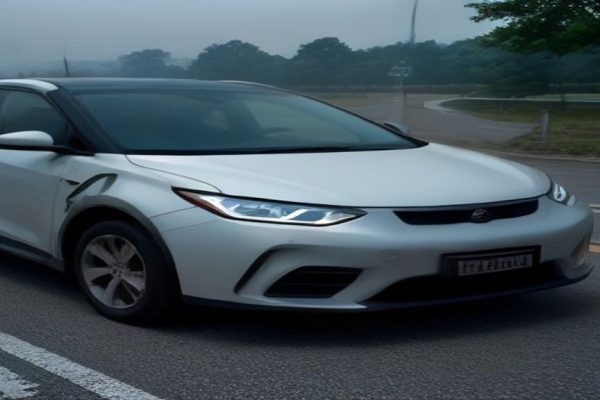
One notable example is the BYD Tang SUV, which features a state-of-the-art lidar system developed in partnership with Chinese tech giant, Baidu. The system uses a combination of cameras, radar, and lidar to enable semi-autonomous driving capabilities. Wu praised the BYD Tang’s approach, saying, ‘It’s a great example of how lidar can be used to create a more comprehensive understanding of the environment.’
Future Implications and Challenges
As the adoption of autonomous driving technology continues to grow, the role of lidar will become increasingly important. Wu predicted that lidar will play a crucial role in the development of Level 4 and Level 5 autonomous vehicles, which can operate without human intervention in most situations.
However, Wu also acknowledged the challenges associated with lidar, including its high cost and complexity. ‘Lidar is still a relatively expensive technology,’ he noted. ‘However, as the industry continues to evolve, we can expect to see more affordable and efficient solutions emerge.’
Key Takeaways
- Lidar technology is essential for creating a detailed map of the environment and enabling accurate navigation in autonomous vehicles.
- Chinese electric car manufacturers, such as BYD and Geely, are at the forefront of innovation in autonomous driving technology.
- The role of lidar will become increasingly important in the development of Level 4 and Level 5 autonomous vehicles.
- Challenges associated with lidar, including cost and complexity, will need to be addressed as the technology continues to evolve.
Image Prompt:
A futuristic illustration of a Chinese electric car, such as the BYD Tang SUV, with a prominent lidar system on the roof. The car is driving down a busy city street, with other vehicles and pedestrians in the background. The lidar system is depicted as a glowing, blue-green mesh that provides a 3D representation of the environment. The image should convey a sense of innovation and technological advancement in the automotive industry.
Category:
Technology






Leave a Reply