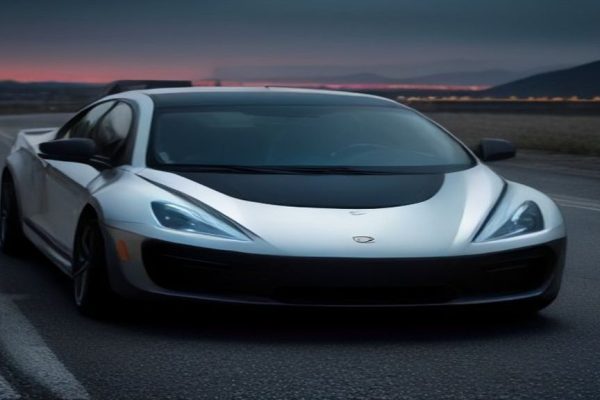
Chinese Carmakers Pushing Boundaries in Autonomous Technology
China has emerged as a major player in the development of autonomous vehicles, with several prominent car manufacturers investing heavily in the technology. Xinzhou Wu, a renowned expert in the field, has been at the forefront of discussions on the future of autonomous vehicles, including the role of LiDAR (Light Detection and Ranging) technology.
LiDAR is a critical component in the development of autonomous cars, as it provides a 3D map of the surroundings, enabling vehicles to detect and respond to their environment. However, the technology has its limitations, and many experts question whether it is truly necessary for the widespread adoption of autonomous vehicles.
Challenges and Limitations of LiDAR Technology
While LiDAR offers several advantages, including its ability to detect objects at long distances and provide high-resolution 3D mapping, it is not without its challenges. The technology is expensive, complex, and requires significant computational power to process the vast amounts of data it generates.
Furthermore, LiDAR has limitations in certain environments, such as heavy rain, fog, or snow, which can reduce its effectiveness. Additionally, the technology raises concerns about data privacy and security, as it collects and stores sensitive information about the vehicle’s surroundings.
The Rise of Chinese Carmakers in Autonomous Technology
China’s big three car manufacturers – Geely, Great Wall, and BYD – have been at the forefront of the country’s autonomous vehicle push. These companies have invested heavily in research and development, partnering with leading technology firms to develop cutting-edge autonomous systems.
Geely, in particular, has made significant strides in the development of autonomous vehicles, with its Volvo subsidiary launching a range of Level 2 and Level 3 autonomous vehicles. The company’s focus on autonomous technology has also led to the development of new business models, including the creation of autonomous ride-hailing services.
Great Wall, another prominent Chinese carmaker, has also been actively developing autonomous technology. The company has partnered with leading tech firms to develop advanced driver-assistance systems (ADAS) and is working on the development of Level 3 and Level 4 autonomous vehicles.
The Future of Autonomous Vehicles: Will LiDAR Remain a Necessity?
As the development of autonomous vehicles continues to advance, there is growing debate about the role of LiDAR technology. Some experts argue that LiDAR is essential for the widespread adoption of autonomous vehicles, while others question its necessity.
Xinzhou Wu, in a recent interview, highlighted the potential for alternative technologies to LiDAR, such as camera-based systems and radar technology. These alternatives offer several advantages, including reduced cost and complexity, and may provide a more viable solution for the development of autonomous vehicles.
However, the shift away from LiDAR technology also raises concerns about the safety and reliability of autonomous vehicles. As the industry continues to evolve, it is likely that we will see a mix of technologies used in the development of autonomous vehicles, with LiDAR playing a role in certain applications, but not necessarily in all.
Conclusion
The future of autonomous vehicles is uncertain, and the role of LiDAR technology remains a topic of debate. While Chinese carmakers continue to push the boundaries of autonomous technology, the industry must address the challenges and limitations of LiDAR, as well as explore alternative solutions. As the world moves towards a future of autonomous transportation, it is essential that we prioritize safety, reliability, and efficiency.
Image Prompt: A futuristic illustration of a Chinese autonomous vehicle navigating through a busy city street, with LiDAR sensors scanning the surroundings and detecting objects in real-time. The vehicle is surrounded by a mixture of traditional and electric vehicles, highlighting the potential for autonomous technology to transform the transportation landscape.






Leave a Reply