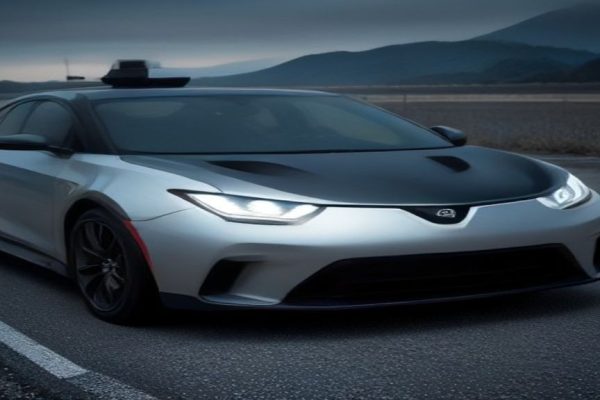
Autonomous Vehicles on the Rise: A Conversation with Xinzhou Wu
As the world rapidly advances towards a future of autonomous vehicles, the conversation surrounding the technology has become increasingly nuanced. Xinzhou Wu, a prominent figure in the industry, recently shared his insights on the importance of lidar in Chinese cars. In an exclusive interview, Wu shed light on the current state of autonomy, highlighting both the progress and challenges the sector faces.
The Role of Lidar in Autonomous Vehicles
Lidar (Light Detection and Ranging) technology has been a subject of debate in the autonomous vehicle space. While some argue it’s not necessary, Wu emphasizes its significance in ensuring safe navigation. ‘Lidar is a crucial component in our autonomous driving systems,’ Wu said. ‘It provides a 3D map of the environment, allowing our cars to perceive and react to their surroundings with greater accuracy.’
The use of lidar in Chinese cars has been a point of contention, with some arguing that it’s an unnecessary expense. However, Wu counters that the technology is essential for achieving true autonomy. ‘Without lidar, our cars would be limited to a narrow lane-following scenario, lacking the ability to adapt to complex situations,’ Wu explained.
The State of Autonomous Vehicles in China
China has been at the forefront of autonomous vehicle development, with several companies, including Baidu and Alibaba, investing heavily in the technology. Wu believes that the country’s unique landscape, characterized by dense population and advanced infrastructure, makes it an ideal testing ground for autonomous vehicles.
‘China’s vast population and limited parking infrastructure create a pressing need for efficient transportation solutions,’ Wu said. ‘Autonomous vehicles can help alleviate these issues, reducing congestion and promoting sustainable mobility.’
However, Wu also acknowledges the challenges facing the industry, including regulatory hurdles and public perception. ‘There’s still a lot of work to be done to educate the public about the benefits of autonomous vehicles,’ Wu noted.
The Future of Autonomous Vehicles: Challenges and Opportunities
As the autonomous vehicle industry continues to evolve, Wu identifies several key challenges that must be addressed. ‘Cybersecurity, liability, and public acceptance are all pressing concerns that require attention,’ Wu stated.
Despite these challenges, Wu remains optimistic about the future of autonomous vehicles. ‘The potential benefits of this technology are vast, from improved safety to enhanced mobility,’ Wu said. ‘As we continue to push the boundaries of what’s possible, we’ll see significant advancements in the years to come.’
As the world hurtles towards a future of autonomous vehicles, it’s essential to understand the complexities and nuances surrounding the technology. With experts like Xinzhou Wu at the forefront of the conversation, we can expect significant progress in the years to come.






Leave a Reply