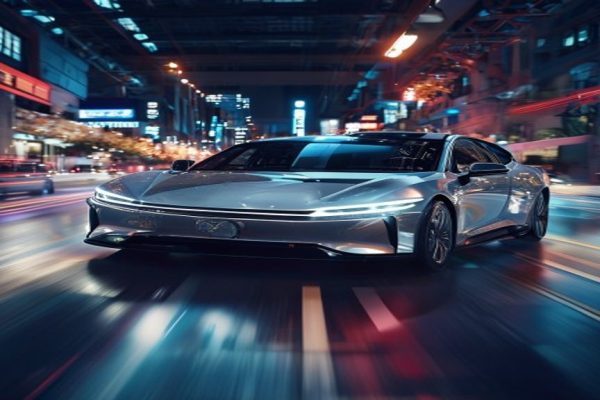
Autonomous Vehicles: The Future of Mobility
The rise of autonomous vehicles (AVs) has been a topic of interest for many in the tech and automotive industries. With companies like Waymo, Tesla, and Baidu pushing the boundaries of autonomous technology, it’s no surprise that experts like Xinzhou Wu are shedding light on the latest advancements. Wu, a renowned expert in the field, recently shared his insights on the future of autonomy, Chinese cars, and the role of lidar in this revolution.
Autonomy in China: A Growing Market
China has been at the forefront of autonomous technology, with numerous companies investing heavily in research and development. Wu points out that Chinese companies have been able to leverage their resources and talent to make significant strides in autonomy. ‘China has been very aggressive in pursuing autonomous technology,’ says Wu. ‘They have the resources, the talent, and the willingness to invest in this space.’
As a result, Chinese companies like Baidu and Geely are making waves in the autonomous vehicle market. Baidu, in particular, has been a pioneer in AV technology, with its Apollo platform being one of the most widely used in the industry. Wu attributes the success of these companies to their ability to adapt and innovate, often at a faster pace than their Western counterparts.
The Role of Lidar in Autonomy
Lidar (Light Detection and Ranging) technology has been a crucial component in the development of autonomous vehicles. It uses laser light to create high-resolution 3D maps of the environment, enabling vehicles to navigate and avoid obstacles. However, Wu raises an interesting point about the need for lidar in autonomy. ‘Do we really need lidar?’ he asks. ‘The answer is not a simple yes or no.’
Wu explains that while lidar has been a game-changer in the development of AVs, it’s not the only solution. Other technologies like cameras, radar, and GPS can also play a significant role in autonomy. ‘The key is to find the right balance between these technologies,’ says Wu. ‘We need to determine what’s necessary and what can be optimized.’
Furthermore, Wu highlights the limitations of lidar in certain environments. ‘Lidar has its limitations in foggy or dusty conditions,’ he notes. ‘In such scenarios, other technologies like cameras and radar become more relevant.’
The Future of Autonomy: Trends and Predictions
So, what can we expect from the future of autonomy? Wu predicts that we’ll see a continued shift towards more advanced sensor suites and improved software algorithms. ‘We’ll see a convergence of technologies like lidar, cameras, and radar,’ he says. ‘This convergence will enable vehicles to make more informed decisions and improve overall safety.’
Another trend that Wu expects is the increased adoption of autonomy in non-vehicle applications. ‘Autonomy is not just about cars,’ he notes. ‘We’ll see its application in drones, robots, and other devices.’
Finally, Wu emphasizes the importance of regulation and standards in the development of autonomy. ‘We need clear guidelines and regulations to ensure the safe deployment of AVs,’ he says. ‘This will be crucial in building trust with the public and paving the way for widespread adoption.’
In conclusion, Wu’s insights provide a fascinating glimpse into the future of autonomy. As the industry continues to evolve, it’s clear that Chinese companies will play a significant role. The debate around the need for lidar is also an important one, with Wu highlighting the need for a balanced approach to autonomy. As we move forward, it’s essential to stay informed about the latest trends and predictions in this rapidly changing landscape.






Leave a Reply