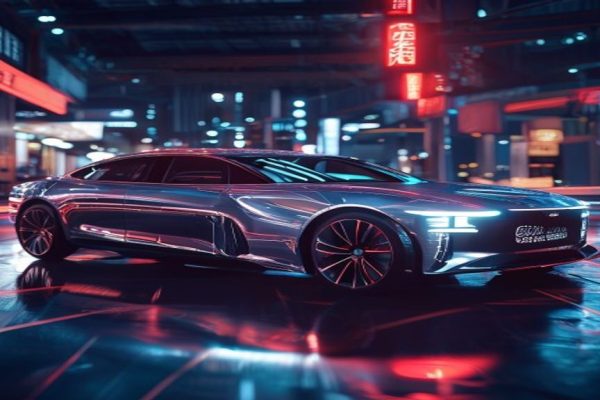
The Future of Chinese Cars: Lidar and Autonomy in the Spotlight
In a recent interview, Xinzhou Wu, a prominent figure in the Chinese automotive industry, shed light on the country’s approach to autonomy and the role of lidar technology in its development. As China continues to push the boundaries of electric and self-driving vehicles, the world is watching with interest. But what does this mean for the future of Chinese cars, and do we really need lidar to achieve true autonomy?
A New Era of Autonomy in China
China has been at the forefront of autonomous vehicle development in recent years, with several major players investing heavily in the technology. Xinzhou Wu, a former chief engineer at Geely, has been instrumental in driving this progress forward. According to Wu, China’s approach to autonomy is centered around a ‘three-stage’ development plan, which focuses on initial sensor-based solutions, followed by the integration of lidar and other advanced sensors, and finally, the development of fully autonomous driving capabilities.
This three-stage approach is designed to ensure a smooth transition from human-driven to autonomous vehicles, minimizing the risks and challenges associated with the technology. By taking a more gradual approach, Chinese manufacturers can refine their systems, address any issues that arise, and ultimately deliver safer, more reliable autonomous vehicles to the market.
The Role of Lidar in Autonomy
Lidar (Light Detection and Ranging) technology has been a hot topic in the autonomous vehicle space, with some arguing that it’s essential for achieving true autonomy, while others claim it’s unnecessary. In the interview, Xinzhou Wu weighed in on the debate, stating that lidar is a crucial component in the development of autonomous vehicles. However, he also emphasized that it’s not the only technology required for autonomy and that a combination of sensors, including cameras, radar, and ultrasonic sensors, is needed to achieve reliable results.
Lidar offers several advantages in the context of autonomy, including high-resolution mapping, precise distance measurement, and the ability to detect and track objects in real-time. However, it also comes with significant drawbacks, including high costs, limited range, and vulnerability to interference. As a result, manufacturers are exploring alternative solutions, such as solid-state lidar, which promises improved performance, reduced costs, and enhanced reliability.
The Future of Chinese Cars
The Chinese automotive market is undergoing a seismic shift, with electric vehicles (EVs) and autonomous technology at the forefront. As demand for EVs continues to grow, Chinese manufacturers are investing heavily in the development of new models, with many expected to feature advanced autonomy capabilities. Xinzhou Wu’s vision for the future of Chinese cars is one of increased electrification, improved safety, and enhanced user experience.
By 2025, China aims to have over 50% of its new car sales consist of electric or plug-in hybrid vehicles. This is a significant shift, and one that will require Chinese manufacturers to adapt quickly to meet the changing demands of the market. As the country continues to push the boundaries of autonomous vehicle development, the world will be watching with interest to see how these technologies shape the future of the automotive industry.
Key Takeaways
- China is at the forefront of autonomous vehicle development, with several major players investing heavily in the technology.
- Xinzhou Wu’s three-stage development plan focuses on initial sensor-based solutions, followed by the integration of lidar and other advanced sensors, and finally, the development of fully autonomous driving capabilities.
- Lidar is a crucial component in the development of autonomous vehicles, but it’s not the only technology required for autonomy.
- Chinese manufacturers are exploring alternative solutions to lidar, including solid-state lidar, which promises improved performance, reduced costs, and enhanced reliability.
- By 2025, China aims to have over 50% of its new car sales consist of electric or plug-in hybrid vehicles.
The future of Chinese cars is bright, with electric vehicles and autonomous technology at the forefront. As the country continues to push the boundaries of innovation, the world will be watching with interest to see how these technologies shape the industry.






Leave a Reply