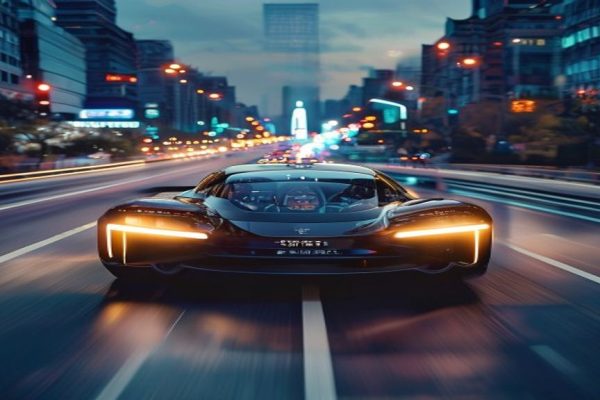
Chinese Innovators Push the Boundaries of Autonomous Vehicles
Xinzhou Wu, a renowned expert in the field of autonomous vehicles, recently shared his insights on the current state of self-driving technology in China. In a thought-provoking interview, Wu discussed the role of autonomy, the challenges faced by Chinese car manufacturers, and the significance of lidar technology in achieving true autonomy.
As the world transitions towards a more autonomous future, China is emerging as a key player in the development of self-driving technology. With a vast and rapidly expanding middle class, the country’s need for efficient and safe transportation solutions is driving innovation in the automotive industry.
The Role of Autonomy in Modern Transportation
Autonomous vehicles have the potential to revolutionize the way we think about transportation. By leveraging advanced sensors, software, and data analytics, self-driving cars can improve safety, reduce traffic congestion, and provide greater mobility for the elderly and disabled.
However, Wu cautions that true autonomy requires more than just advanced technology. ‘Autonomy is not just about the car,’ he says. ‘It’s about creating a safe and reliable ecosystem that includes the vehicle, the infrastructure, and the humans who interact with it.’
Chinese Car Manufacturers Face Unique Challenges
Chinese car manufacturers, such as Geely and BYD, are making significant strides in the development of autonomous vehicles. However, they face unique challenges, including limited access to advanced technologies and a shortage of skilled engineers.
‘The biggest challenge for Chinese car manufacturers is the lack of access to advanced technologies, such as lidar and computer vision,’ Wu explains. ‘However, this also presents an opportunity for innovation and creativity.’
The Significance of Lidar Technology
Lidar (Light Detection and Ranging) technology is a crucial component of self-driving vehicles, enabling them to create high-resolution maps of their surroundings. However, Wu argues that lidar is just one piece of the puzzle, and that other technologies, such as computer vision and machine learning, are equally important.
‘Lidar is a necessary but not sufficient condition for autonomy,’ Wu says. ‘We need a combination of technologies to achieve true autonomy.’
Future Implications of Autonomous Vehicles
The implications of autonomous vehicles are far-reaching and profound. As Wu notes, ‘Autonomous vehicles have the potential to transform the way we live, work, and interact with each other.’
With the rapid development of autonomous technology, we can expect to see significant changes in the way we design cities, manage traffic, and provide transportation services. As Wu concludes, ‘The future of transportation is not just about cars; it’s about creating a safe, efficient, and sustainable ecosystem that benefits everyone.’
In conclusion, Xinzhou Wu’s insights provide a unique perspective on the future of autonomous vehicles in China. As the world transitions towards a more autonomous future, it is clear that Chinese innovators will play a key role in shaping the road to autonomy.






Leave a Reply