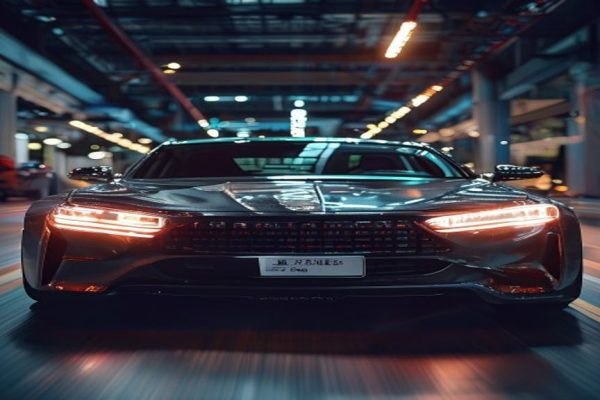
Chinese Carmakers Embrace Autonomy with a Twist
Xinzhou Wu, a prominent figure in the Chinese automotive industry, has sparked a heated debate about the future of autonomous vehicles. In a recent interview, Wu shared his thoughts on autonomy, Chinese car manufacturers’ approach, and the role of lidar technology. As the world waits with bated breath for the next innovation in self-driving cars, Wu’s comments offer a glimpse into the evolving landscape of the industry.
Challenging the Status Quo: Lidar’s Role in Autonomy
Lidar (Light Detection and Ranging) technology has been a cornerstone of autonomous vehicles, providing critical data for navigation and mapping. However, Wu’s statements suggest that Chinese carmakers are exploring alternative approaches to achieve autonomy without relying on lidar. This shift has significant implications for the industry, as lidar has been a major component in many autonomous vehicles developed to date.
Lidar’s high cost and limited range have long been seen as barriers to widespread adoption. By moving away from lidar, Chinese carmakers may be able to reduce costs and improve efficiency. However, this also raises concerns about the potential impact on safety and performance. Will the industry’s reliance on lidar be replaced by more innovative solutions?
The Rise of Chinese Carmakers: A New Era of Autonomy
China has emerged as a leader in the electric vehicle (EV) market, with companies like BYD, Geely, and NIO making significant strides in autonomy. Wu’s comments reflect this growing confidence and expertise in the industry. Chinese carmakers are no longer content to merely follow the lead of established players; they are now pushing the boundaries of innovation and challenging the status quo.
Wu’s statements also highlight the importance of software development in autonomous vehicles. Chinese carmakers are investing heavily in AI research and development, with a focus on creating more sophisticated software solutions. This shift towards software-driven autonomy could pave the way for more efficient and cost-effective solutions.
The Future of Autonomy: A Lidar-Less World?
While Wu’s comments are intriguing, it’s essential to note that the industry is still in its early stages. Autonomy is a complex and multifaceted field, and there is no one-size-fits-all solution. The debate over lidar’s role in autonomy is likely to continue, with proponents arguing for its benefits and opponents highlighting its limitations.
As the industry evolves, we can expect to see more innovative approaches to autonomy emerge. Chinese carmakers’ willingness to challenge the status quo and explore alternative solutions could lead to breakthroughs in the field. However, it’s also possible that lidar’s importance will be reevaluated as new technologies and innovations emerge.
The future of autonomy is uncertain, but one thing is clear: the industry is on the cusp of a significant transformation. With Chinese carmakers pushing the boundaries of innovation, it’s an exciting time to be a part of the autonomous vehicle landscape.
Key points to consider:
- Chinese carmakers are exploring alternative approaches to autonomy, potentially moving away from lidar technology.
- Lidar’s high cost and limited range have long been seen as barriers to widespread adoption.
- Chinese carmakers are investing heavily in AI research and development, with a focus on creating more sophisticated software solutions.
- The industry is still in its early stages, and there is no one-size-fits-all solution to autonomy.
As the debate over lidar’s role in autonomy continues, one thing is clear: the future of autonomous vehicles is uncertain, but it’s an exciting time to be a part of the industry.






Leave a Reply