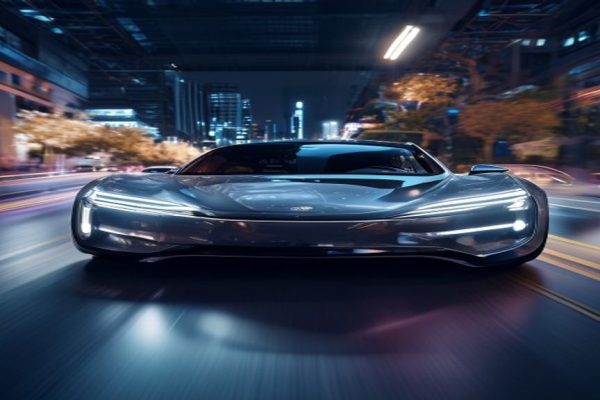
In a recent interview, Xinzhou Wu, a prominent figure in the field of autonomous driving, shared his insights on the state of autonomy in Chinese cars and the role of lidar in this technology. As the world grapples with the promise and challenges of autonomous vehicles, Wu’s expertise offers a unique perspective on the current landscape and future implications.
Background: The Rise of Autonomous Driving in China
China has been at the forefront of autonomous driving research and development in recent years, with several major players investing heavily in this technology. Wu, as a key figure in this ecosystem, has witnessed firsthand the rapid progress made in the field. Despite this, he emphasizes that there is still much work to be done before autonomous vehicles become a reality.
One of the primary challenges facing autonomous driving is the lack of standardized regulations and guidelines. In China, as in other countries, governments are still grappling with how to regulate the development and deployment of autonomous vehicles. Wu suggests that a more collaborative approach between governments, industry leaders, and academia is necessary to drive progress in this area.
The Role of Lidar in Autonomous Driving
Lidar (Light Detection and Ranging) technology has been a key component in the development of autonomous vehicles. By using laser light to create high-resolution 3D maps of the environment, lidar enables vehicles to detect and respond to their surroundings in real-time. However, Wu questions whether lidar is truly necessary for autonomous driving, suggesting that other sensors and technologies may be sufficient for certain applications.
Wu’s comments on lidar are significant, as many industry players have invested heavily in this technology. Companies like Velodyne, a leading lidar manufacturer, have seen significant growth in recent years, driven by the demand for autonomous driving solutions. However, if Wu’s assertion that lidar is not essential for autonomous driving is correct, it could have far-reaching implications for the industry.
Future Implications: The Impact on Chinese Cars and Beyond
Wu’s views on autonomy and lidar have significant implications for the future of Chinese cars and the broader automotive industry. If Chinese manufacturers can develop autonomous driving solutions without relying on expensive lidar technology, it could give them a significant competitive advantage in the global market.
However, Wu’s comments also highlight the need for more research and development in the field of autonomous driving. While China has made significant progress in this area, there is still much work to be done before autonomous vehicles become a reality. Wu’s emphasis on the importance of collaboration and innovation in driving progress is a timely reminder of the challenges facing the industry.
In conclusion, Xinzhou Wu’s insights on autonomy and lidar offer a unique perspective on the current state of autonomous driving in China. As the world continues to grapple with the promise and challenges of this technology, Wu’s expertise will be essential in shaping the future of the industry.






Leave a Reply