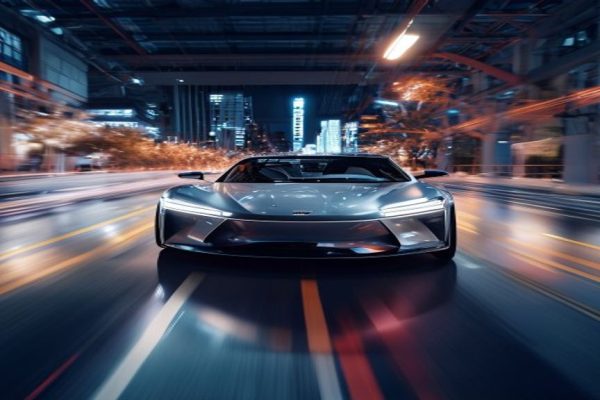
Chinese Automotive Industry Seeks to Pioneer Autonomous Vehicles
The Chinese automotive industry is rapidly moving towards the development and deployment of autonomous vehicles. In a recent interview, Xinzhou Wu, a prominent figure in the industry, discussed the challenges and opportunities surrounding autonomous vehicles in China. Wu’s insights provide valuable context for understanding the industry’s goals and strategies.
China has been at the forefront of autonomous vehicle development, with several major manufacturers, including BYD, Geely, and Great Wall Motor, actively working on autonomous vehicle technology. The country’s vast network of roads, combined with its rapidly growing middle class and increasing urbanization, make it an ideal testing ground for autonomous vehicles.
Autonomy: A Key Focus Area for Chinese Automakers
Autonomous vehicles are a critical component of China’s automotive industry strategy. Chinese automakers are racing to develop and deploy Level 3 and Level 4 autonomous vehicles, which can operate without human intervention in certain situations. The goal is to create a seamless and efficient transportation system that reduces accidents, improves traffic flow, and enhances overall road safety.
Wu emphasized the importance of autonomy in the Chinese automotive industry, stating that it is a key differentiator for domestic manufacturers. He noted that Chinese automakers are focusing on developing autonomous vehicle technology that can be integrated into a wide range of vehicles, from passenger cars to commercial vehicles.
Lidar: A Questionable Necessity for Autonomous Vehicles?
One of the most widely used sensors in autonomous vehicles is lidar (Light Detection and Ranging). Lidar uses laser light to create high-resolution 3D maps of the environment, which are essential for autonomous vehicles to navigate safely. However, Wu raised questions about the necessity of lidar in autonomous vehicles, suggesting that it may not be as critical as previously thought.
Wu argued that lidar is a costly and complex technology that adds significant weight and power consumption to autonomous vehicles. He suggested that other sensors, such as cameras and radar, may be sufficient for autonomous vehicles to operate safely and efficiently. This raises important questions about the future of lidar technology in the automotive industry.
Future Implications for the Automotive Industry
The development and deployment of autonomous vehicles will have significant implications for the automotive industry as a whole. As Chinese automakers push forward with autonomous vehicle technology, the industry is likely to see increased competition and innovation. The use of lidar and other sensors will be a key area of focus, with companies exploring new technologies and business models to reduce costs and improve performance.
The impact on employment will also be significant. With autonomous vehicles, the need for human drivers will decrease, potentially leading to job losses in the transportation sector. On the other hand, the development of autonomous vehicles will create new job opportunities in areas such as software development, data analysis, and cybersecurity.
Key Takeaways
- The Chinese automotive industry is pushing the development and deployment of autonomous vehicles.
- Autonomous vehicles are a key differentiator for Chinese automakers.
- Lidar may not be as necessary for autonomous vehicles as previously thought.
- The development and deployment of autonomous vehicles will have significant implications for the automotive industry.
- New job opportunities will emerge in areas such as software development and data analysis.
The future of autonomous vehicles is complex and multifaceted. As the Chinese automotive industry continues to push forward with autonomous vehicle technology, the industry is likely to see increased competition and innovation. The use of lidar and other sensors will be a key area of focus, with companies exploring new technologies and business models to reduce costs and improve performance.






Leave a Reply