Crackdown on Deepfake Apps: Apple and Google Ordered to Take Down Nudifying and Undressing Apps
In a significant move, tech giants Apple and Google have been issued cease-and-desist letters by authorities, instructing them to remove apps that can create and distribute deepfakes, specifically those that can nudify or undress individuals. This development marks a significant escalation in the fight against the misuse of deepfake technology, which has raised concerns about the spread of explicit content and the potential for harassment and exploitation.
The Rise of Deepfake Apps: A Growing Concern
Deepfake apps have been gaining popularity in recent years, with many users exploiting the technology to create manipulated content that can be used to harass, intimidate, or exploit others. These apps often use artificial intelligence and machine learning algorithms to superimpose a person’s face or body onto a different image or video, creating a realistic and often disturbing effect.
The ease of access to deepfake technology has made it a tool of choice for malicious actors, who can use it to spread explicit content, blackmail, or extort individuals. The rise of deepfake apps has also led to concerns about the impact on mental health, as victims of deepfake harassment may experience anxiety, depression, and even post-traumatic stress disorder.
The Role of Apple and Google in Regulating Deepfake Apps
Apple and Google, two of the world’s largest tech companies, have been accused of failing to adequately regulate deepfake apps on their respective app stores. While both companies have policies in place to prohibit explicit content, critics argue that they have not done enough to prevent the spread of deepfakes.
According to reports, Apple has removed several deepfake apps from the App Store in the past, but many others remain available. Google, on the other hand, has been criticized for its lax approach to regulating deepfakes on the Google Play Store.
The cease-and-desist letters issued to Apple and Google are a clear indication that authorities are taking a more aggressive stance against the misuse of deepfake technology. By ordering the tech giants to remove deepfake apps and stop profiting from the technology, authorities are sending a strong message that the spread of explicit content will not be tolerated.
The Future Implications of the Crackdown on Deepfake Apps
The crackdown on deepfake apps has significant implications for the tech industry, as well as for individuals who use these apps. While the move is seen as a positive step in the fight against harassment and exploitation, it also raises questions about the impact on free speech and the right to create and distribute content.
As deepfake technology continues to evolve, it is likely that we will see more sophisticated and realistic manipulation of content. However, with the rise of AI-powered tools that can detect deepfakes, it may become increasingly difficult for malicious actors to spread explicit content undetected.
In conclusion, the crackdown on deepfake apps is a significant development in the fight against the misuse of AI technology. By working together, authorities, tech companies, and individuals can create a safer and more responsible online environment, where the spread of explicit content is minimized and free speech is protected.
Key Points:
- Apple and Google have been ordered to remove deepfake apps that can nudify or undress individuals.
- The tech giants have been told to stop profiting from the technology.
- The move is seen as a positive step in the fight against harassment and exploitation.
- The crackdown on deepfake apps raises questions about the impact on free speech and the right to create and distribute content.
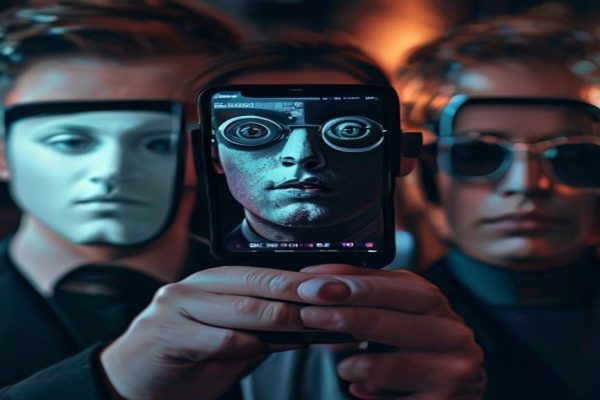
Image Prompt: A close-up of a smartphone screen showing a deepfake app, with a person’s face superimposed onto a different image. In the background, a blurred image of a cityscape or a forest to represent the online world. The image should be ominous and foreboding, with a sense of unease and tension.






Leave a Reply