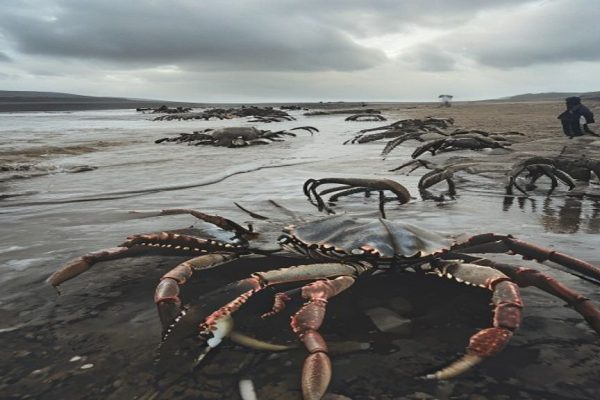
Unprecedented Invasion: Giant Crabs Appear on English Shores
In a bizarre and alarming turn of events, a large number of giant crabs have washed up on beaches in England, leaving experts and locals alike scratching their heads. The sudden appearance of these massive crustaceans has sparked widespread concern and curiosity, with many wondering how they ended up in the UK and what this might mean for the environment.
According to eyewitnesses, the crabs are estimated to be around 20 in number, with some speculating that they may be a new invasive species. While the exact origin of the crabs is still unknown, experts believe that they may have been blown into the UK from other parts of the world by strong winds or ocean currents.
The giant crabs, which are thought to be a species of Portunus, are typically found in tropical and subtropical waters, making their appearance in the UK a significant anomaly. As the weather continues to warm, it’s possible that more of these massive crustaceans may wash up on English shores, posing a potential threat to local ecosystems.
Environmental Concerns: The Potential Impact of Invasive Species
Invasive species can have devastating effects on native ecosystems, outcompeting local species for food and resources, and even altering the delicate balance of the food chain. The presence of giant crabs in the UK could potentially disrupt the local marine ecosystem, leading to a decline in fish populations and other marine life.
However, it’s worth noting that the impact of these crabs will depend on a variety of factors, including their numbers, behavior, and adaptability to the UK environment. If the crabs are able to establish a breeding population, it could have significant consequences for the local ecosystem.
The UK has a history of dealing with invasive species, from zebra mussels to American signal crayfish. In each case, the introduction of non-native species has had significant impacts on the environment, economy, and human health. As the giant crabs continue to appear on English beaches, it’s essential that experts and authorities take swift action to assess the situation and develop a plan to mitigate any potential harm.
A Growing Trend: The Rise of Invasive Species
The appearance of giant crabs in the UK is part of a larger trend of invasive species making their way into new regions. Climate change, global trade, and human activity have all contributed to the spread of non-native species, which can have far-reaching consequences for local ecosystems.
From the emerald ash borer to the American bullfrog, invasive species are becoming an increasingly common problem worldwide. As the climate continues to change and human activity disrupts the natural balance, it’s essential that we take proactive steps to prevent the introduction of new invasive species and mitigate the impacts of those that have already been introduced.
By working together, we can reduce the risks associated with invasive species and protect the health and integrity of our ecosystems. As the giant crabs continue to make headlines, it’s a timely reminder of the importance of environmental stewardship and the need for continued vigilance in the face of climate change.
- The giant crabs are thought to be a species of Portunus, typically found in tropical and subtropical waters.
- The crabs may have been blown into the UK from other parts of the world by strong winds or ocean currents.
- Invasive species can have devastating effects on native ecosystems, outcompeting local species for food and resources.
- The UK has a history of dealing with invasive species, including zebra mussels and American signal crayfish.
In conclusion, the appearance of giant crabs on English beaches is a concerning development that highlights the importance of environmental stewardship and the need for continued vigilance in the face of climate change. As we move forward, it’s essential that experts and authorities work together to assess the situation and develop a plan to mitigate any potential harm.
Only time will tell how this story unfolds, but one thing is certain: the UK is facing a growing tide of concern, and it’s up to us to take action to protect our environment.






Leave a Reply