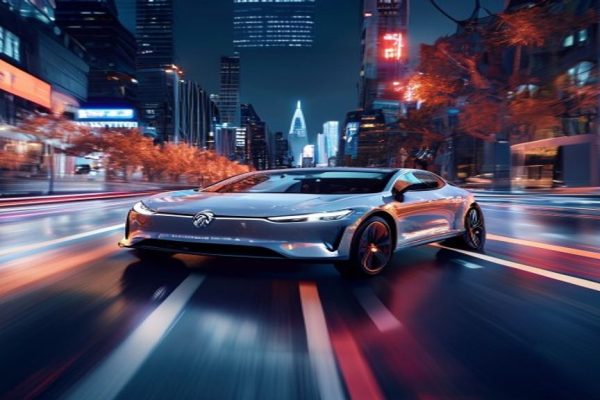
China’s Leap in Electric Vehicle Technology
China has been at the forefront of the global shift towards electric vehicles (EVs), with the country accounting for over 50% of the world’s EV sales. In a recent interview, Xinzhou Wu, a renowned expert in the field of autonomous driving, shed light on the future of Chinese EVs and the role of lidar technology in achieving autonomy.
Lidar (Light Detection and Ranging) technology uses laser light to create high-resolution 3D maps of the environment, enabling vehicles to detect and respond to their surroundings. While traditional radar and cameras have been the primary sensors in autonomous vehicles, lidar has emerged as a critical component in achieving Level 4 and Level 5 autonomy.
The Rise of Chinese Electric Vehicles
China’s massive EV market has driven significant investments in research and development, resulting in the creation of several innovative EV manufacturers. Companies like BYD, Geely, and NIO have been at the forefront of this revolution, with their electric vehicles gaining popularity both domestically and internationally.
According to a report by BloombergNEF, China’s EV market is expected to reach 50 million units by 2030, accounting for over 70% of the world’s total EV sales. This growth is driven by the government’s aggressive policies, including subsidies, tax incentives, and investments in EV infrastructure.
The Role of Lidar in Autonomous Driving
Lidar technology has been instrumental in the development of autonomous driving systems. Wu emphasized the importance of lidar in achieving high levels of autonomy, stating that it provides a more accurate and comprehensive view of the environment than traditional sensors.
Wu highlighted the benefits of lidar in real-world scenarios, such as its ability to detect pedestrians, cyclists, and other vehicles in complex environments. He also discussed the challenges associated with lidar, including its high cost, limited range, and sensitivity to weather conditions.
The Future of Transportation in China
As China continues to lead the global EV revolution, the country is poised to become a pioneer in autonomous transportation. Wu believes that the integration of lidar and other sensors will pave the way for widespread adoption of autonomous vehicles.
The Chinese government has already initiated several initiatives to promote the development of autonomous driving technology. These include the establishment of dedicated lanes for autonomous vehicles and the creation of autonomous driving testing zones.
The future implications of this trend are significant, with potential benefits including reduced traffic congestion, improved road safety, and increased mobility for the elderly and disabled. As Wu noted, the future of transportation in China will be shaped by the convergence of technology, policy, and societal needs.
- China’s EV market is expected to reach 50 million units by 2030.
- Lidar technology is critical in achieving high levels of autonomy in vehicles.
- The Chinese government has initiated several initiatives to promote the development of autonomous driving technology.
- Autonomous vehicles have the potential to reduce traffic congestion, improve road safety, and increase mobility for the elderly and disabled.
This article provides a comprehensive overview of the current state of Chinese EV technology, the role of lidar in autonomous driving, and the future implications of this trend. As the world continues to shift towards a more sustainable and connected transportation system, China’s leadership in EVs and autonomous driving is poised to have a significant impact on the global automotive industry.






Leave a Reply