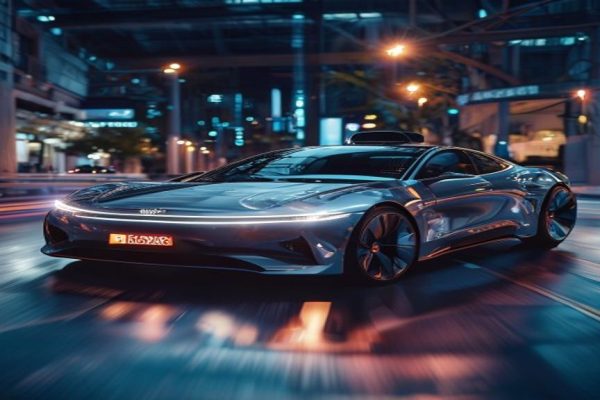
A Conversation with Xinzhou Wu on the Evolution of Autonomous Driving
Xinzhou Wu, a renowned expert in the field of autonomous vehicles, recently sat down with Nilay Patel to discuss the current state of autonomous driving technology, the role of Chinese manufacturers, and the potential for lidar-free vehicles. The conversation shed light on the rapidly evolving landscape of autonomous vehicles and the challenges that lie ahead.
The Rise of Chinese Autonomous Vehicle Manufacturers
China has emerged as a significant player in the autonomous vehicle market, with several domestic manufacturers investing heavily in the technology. Wu noted that Chinese companies like Geely and Great Wall Motors are making significant strides in autonomous driving, with a focus on developing cost-effective and efficient solutions. This has raised questions about the viability of lidar technology, a crucial component in many current autonomous vehicle systems.
Lidar, or Light Detection and Ranging, is a key sensor used in many autonomous vehicles to detect and navigate the environment. However, it has several limitations, including high costs, complexity, and environmental sensitivity. Wu suggested that Chinese manufacturers are exploring alternative solutions, such as cameras and radar, to achieve autonomous capabilities without relying on lidar.
The Case for Lidar-Free Autonomous Vehicles
Wu argues that lidar-free autonomous vehicles are not only feasible but also potentially more practical for widespread adoption. He points out that many current autonomous vehicle systems rely heavily on lidar, which can be a significant barrier to entry for smaller manufacturers. By developing alternative solutions, Wu believes that Chinese manufacturers can create more accessible and affordable autonomous vehicles.
Additionally, Wu highlights the importance of environmental factors in autonomous vehicle development. In China, where weather conditions can be particularly harsh, Wu suggests that lidar-free solutions may be better suited to handle the challenges of extreme weather conditions. This could potentially give Chinese manufacturers a competitive edge in the global market.
Implications for the Autonomous Vehicle Industry
The conversation with Xinzhou Wu has significant implications for the autonomous vehicle industry as a whole. As Chinese manufacturers continue to push the boundaries of autonomous driving technology, it raises questions about the future of lidar and the role of other sensor technologies. If lidar-free autonomous vehicles become a reality, it could disrupt the current market dynamics and create new opportunities for smaller manufacturers.
However, Wu emphasizes that the development of autonomous vehicles is a complex and multifaceted challenge. He notes that while lidar-free solutions may be more accessible, they still require significant investment in research and development. Wu believes that the industry must continue to push the boundaries of innovation to create safe and efficient autonomous vehicles.
Conclusion
The conversation with Xinzhou Wu offers a glimpse into the rapidly evolving world of autonomous vehicles. As Chinese manufacturers continue to invest in autonomous driving technology, it raises questions about the future of lidar and the role of other sensor technologies. While the development of lidar-free autonomous vehicles is still in its infancy, it has the potential to disrupt the current market dynamics and create new opportunities for innovation.
The future of autonomous vehicles is uncertain, but one thing is clear: the industry must continue to push the boundaries of innovation to create safe and efficient vehicles for the masses.






Leave a Reply