Chinese Car Makers Embracing Autonomous Driving with Lidar Technology
In a recent interview, Xinzhou Wu, a prominent figure in the field of autonomous driving, shed light on the significance of lidar technology in Chinese car makers’ pursuit of autonomous vehicles. Wu’s insights provide valuable context to the ongoing debate surrounding the role of lidar in achieving level 5 autonomy.
The Importance of Lidar in Autonomous Driving
Lidar (Light Detection and Ranging) technology has been at the epicenter of the autonomous driving revolution. By emitting laser light and measuring the reflected beams, lidar sensors create high-resolution 3D maps of a vehicle’s surroundings. This enables advanced driver-assistance systems (ADAS) to detect and respond to obstacles, pedestrians, and other road users with unprecedented accuracy.
However, the high cost and complexity of lidar systems have led some manufacturers to explore alternative sensor suites. Wu’s comments on the Chinese car market’s perspective on lidar technology offer a unique perspective on the industry’s trajectory.
The Chinese Car Market’s Approach to Autonomous Driving
China has become a global leader in electric vehicle (EV) adoption, with many local manufacturers pioneering innovative technologies to enhance the driving experience. Wu’s statements suggest that Chinese car makers are prioritizing lidar technology as a key component of their autonomous driving strategies.
According to Wu, the Chinese government’s aggressive targets for EV adoption have created a competitive environment where manufacturers are investing heavily in R&D. This has led to a significant reduction in lidar costs, making it more feasible for Chinese car makers to integrate the technology into their vehicles.
Wu also emphasized the importance of collaboration between Chinese and international companies in driving innovation. By pooling resources and expertise, manufacturers can accelerate the development of autonomous driving technologies, including lidar.
The Future of Autonomous Driving: Lidar or Alternative Solutions?
As the autonomous driving landscape continues to evolve, the role of lidar technology remains a topic of debate. While some manufacturers are exploring alternative sensor suites, such as camera-based systems or radar, Wu’s comments suggest that lidar will remain a crucial component of Chinese car makers’ autonomous driving strategies.
The Chinese government’s commitment to EV adoption and its associated targets has created a perfect storm for innovation. As manufacturers continue to push the boundaries of autonomous driving, it will be fascinating to observe how lidar technology evolves and whether alternative solutions can effectively challenge its dominance.
In conclusion, Xinzhou Wu’s insights on lidar technology in Chinese car makers’ pursuit of autonomous vehicles provide a valuable perspective on the industry’s trajectory. As the autonomous driving revolution continues to shape the automotive landscape, it will be crucial to monitor the development of lidar technology and its potential impact on the future of mobility.
**Key Takeaways:**
- Lidar technology is a crucial component of Chinese car makers’ autonomous driving strategies.
- The Chinese government’s targets for EV adoption have created a competitive environment where manufacturers are investing heavily in R&D.
- Collaboration between Chinese and international companies is driving innovation in autonomous driving technologies.
- The role of lidar technology in autonomous driving remains a topic of debate, with alternative solutions emerging as potential challengers.
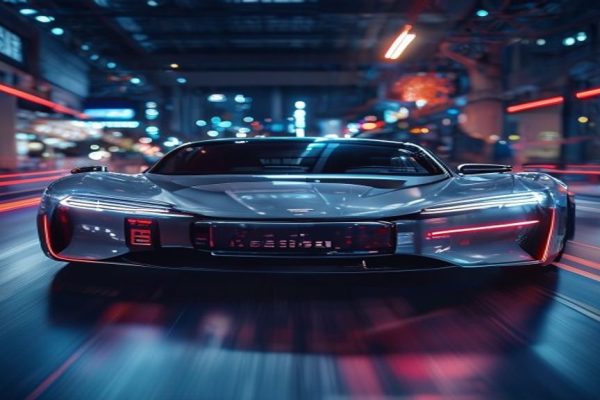
**Image Prompt:** An AI-generated image of a sleek, futuristic Chinese autonomous vehicle, with a prominent lidar sensor mounted on the front grille. The vehicle is surrounded by a blurred cityscape, with a subtle hint of a 3D map projected onto the ground. The image should convey a sense of innovation, technology, and forward thinking.






Leave a Reply