Chinese Automakers on the Cusp of Autonomous Revolution
Xinzhou Wu, a prominent expert in the field, has sparked a heated debate on the importance of lidar technology in the development of autonomous vehicles. In an exclusive interview with Nilay Patel, Wu shared his thoughts on the role of lidar in the autonomous revolution, particularly in the context of Chinese automakers.
Lidar, short for Light Detection and Ranging, is a crucial sensor technology that uses laser light to create high-resolution 3D images of the environment. This technology has been hailed as a game-changer in the pursuit of fully autonomous vehicles, allowing cars to perceive their surroundings and make informed decisions without human intervention.
The Rise of Chinese Automakers
China has emerged as a major player in the global automotive industry, with companies like BYD, Geely, and Great Wall Motor gaining significant traction. These Chinese automakers have been at the forefront of the autonomous revolution, investing heavily in research and development to create cutting-edge vehicles.
According to Wu, Chinese automakers have made significant strides in the development of autonomous technology, leveraging advancements in lidar, computer vision, and artificial intelligence. “Chinese companies have been very aggressive in investing in autonomous driving technology,” Wu said. “They have a large market share in China, and they see autonomous vehicles as a key differentiator in the global market.”
The Lidar Conundrum
Despite the importance of lidar in autonomous vehicles, Wu raised valid concerns about its redundancy in certain scenarios. “Lidar is a very expensive technology, and it’s not always necessary,” Wu said. “In some cases, cameras and sensors can provide similar or even better performance at a lower cost.”
Wu’s comments have sparked a heated debate among industry experts, with some arguing that lidar is a crucial component in the development of fully autonomous vehicles. Others, however, see it as a luxury item, arguing that its high cost and complexity make it less appealing to consumers.
The debate surrounding lidar highlights the complexities of the autonomous revolution. As companies like Waymo and Cruise continue to push the boundaries of autonomous technology, the question remains: do we really need lidar to achieve true autonomy?
Future Implications
The implications of lidar’s role in autonomous vehicles are far-reaching, with potential consequences for the automotive industry, consumers, and the environment. If lidar is deemed redundant, it could lead to reduced costs and increased adoption of autonomous vehicles, making them more accessible to the masses.
On the other hand, if lidar remains a crucial component, it could lead to increased investment in the technology, driving innovation and advancements in the field. The debate surrounding lidar highlights the need for continued research and development, as the industry navigates the complexities of autonomous technology.
As the world hurtles towards a future of autonomous vehicles, the question remains: what does the future hold for lidar technology? Only time will tell if it’s a key differentiator or a redundant luxury.
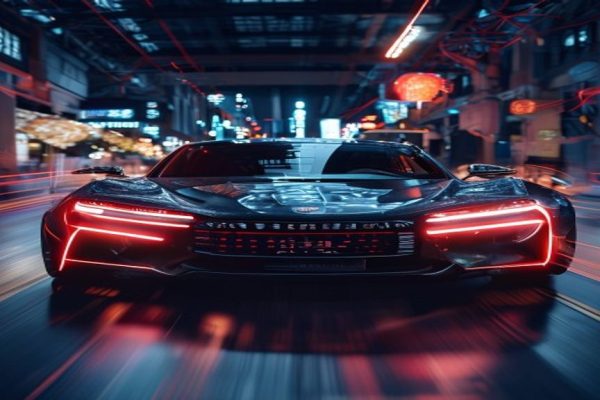
Image prompt: A sleek, futuristic autonomous vehicle navigating a busy city street, with a prominent lidar sensor mounted on the roof. The vehicle is surrounded by a bustling cityscape, with skyscrapers and pedestrians in the background. The lidar sensor is highlighted in a vibrant, neon color, emphasizing its importance in the autonomous revolution.
Key points:
- Xinzhou Wu, a prominent expert in autonomous technology, has raised concerns about the redundancy of lidar in certain scenarios.
- Chinese automakers have made significant strides in the development of autonomous technology, leveraging advancements in lidar, computer vision, and artificial intelligence.
- The debate surrounding lidar highlights the complexities of the autonomous revolution and the need for continued research and development.
- The implications of lidar’s role in autonomous vehicles are far-reaching, with potential consequences for the automotive industry, consumers, and the environment.






Leave a Reply