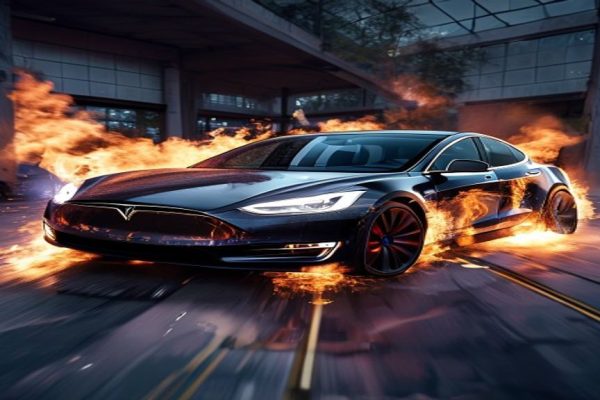
Tesla Model 3 Autopilot System Under Fire After Fatal Crash Investigation Reveals Driver Error
The recent investigation into the 2022 fatal crash involving a Tesla Model 3 has brought the spotlight back on the Autopilot system, sparking heated debates about its reliability and safety. The National Highway Traffic Safety Administration (NHTSA) and the National Transportation Safety Board (NTSB) have been conducting a thorough investigation into the incident, which resulted in the deaths of five people.
Key Findings of the Investigation
According to the preliminary reports, the Model 3 driver had the accelerator pressed all the way to 100% at the time of the crash. This has raised serious concerns about the driver’s behavior and the potential role of the Autopilot system in the incident. While Tesla’s Autopilot system is designed to assist drivers and improve road safety, it is not intended to be a fully autonomous driving system. In fact, the company’s website explicitly states that the system is ‘designed to assist with steering, acceleration, and braking, but does not make the vehicle autonomous.’
The Dark Side of Autopilot: Driver Dependence
One of the main concerns surrounding Autopilot is the potential for driver dependence. As the system becomes increasingly sophisticated, some drivers may start to rely too heavily on it, taking their eyes off the road and their hands off the wheel. This can be particularly hazardous, especially in situations where the system is unsure or overwhelmed. In the case of the 2022 fatal crash, it appears that the driver may have become complacent, relying on Autopilot to navigate the road without proper attention.
Future Implications for Tesla and the Autonomous Vehicle Industry
The investigation into the Tesla Model 3 crash has significant implications for the company and the broader autonomous vehicle industry. As the world becomes increasingly dependent on technology, the need for robust and reliable safety features becomes more pressing. Tesla, in particular, has a reputation for pushing the boundaries of innovation, and its Autopilot system has been at the forefront of the autonomous vehicle revolution. However, this incident serves as a stark reminder of the importance of human oversight and the need for continued improvement in safety features.
The NHTSA and NTSB have recommended a number of changes to Tesla’s Autopilot system, including the implementation of a more robust driver monitoring system and the development of more advanced safety features. While these recommendations are still in the early stages, they signal a shift towards a more cautious approach to autonomous vehicle development.
What’s Next for Tesla and the Autonomous Vehicle Industry?
In the aftermath of the investigation, Tesla has announced plans to implement a number of changes to its Autopilot system, including the addition of more advanced driver monitoring features and the development of a more robust safety protocol. While these changes are a positive step, they also highlight the need for continued vigilance and improvement in the autonomous vehicle industry.
As the world hurtles towards a future of autonomous vehicles, it is essential that we prioritize safety and reliability above all else. The investigation into the Tesla Model 3 crash serves as a stark reminder of the importance of human oversight and the need for continued improvement in safety features. By working together, we can create a safer, more reliable, and more innovative autonomous vehicle industry for generations to come.
Key points:
- The investigation into the 2022 fatal crash involving a Tesla Model 3 has raised serious concerns about the Autopilot system and driver error.
- The driver had the accelerator pressed all the way to 100% at the time of the crash, highlighting the potential for driver dependence on the Autopilot system.
- The NHTSA and NTSB have recommended changes to Tesla’s Autopilot system, including the implementation of a more robust driver monitoring system.
- Tesla has announced plans to implement changes to its Autopilot system, including the addition of more advanced driver monitoring features.






Leave a Reply