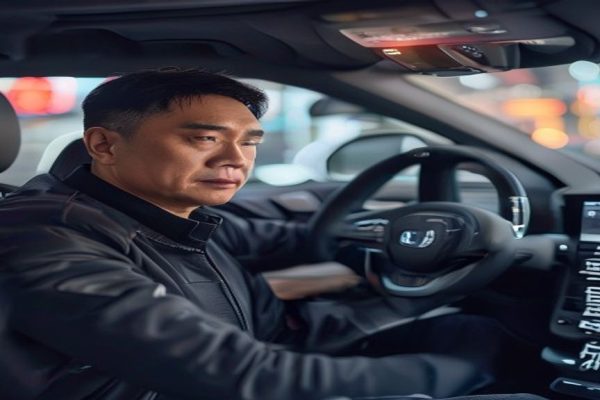
Xinzhou Wu Weighs in on China’s Self-Driving Ambitions
Xinzhou Wu, a prominent figure in China’s automotive industry, has shared his insights on the country’s push for autonomous vehicles. In a recent interview, Wu discussed the role of lidar technology, the challenges of developing self-driving cars, and the potential impact on the global market.
The Importance of Lidar in Autonomous Vehicles
Lidar (Light Detection and Ranging) technology has been a crucial component in the development of self-driving cars. Wu emphasizes the significance of lidar in providing high-resolution 3D mapping and precise distance measurements. However, he also acknowledges the limitations of lidar, particularly in scenarios with heavy rain, fog, or snow.
Wu suggests that Chinese automakers are exploring alternative solutions to complement lidar, such as the use of cameras and radar systems. This multi-sensor approach aims to enhance the reliability and robustness of autonomous vehicles in various environmental conditions.
Challenges and Opportunities in China’s Self-Driving Market
China has been at the forefront of autonomous vehicle development, with several major players investing heavily in research and testing. Wu highlights the unique challenges faced by Chinese automakers, including the need to adapt to the country’s complex and rapidly changing regulatory landscape.
Despite these challenges, Wu is optimistic about the potential of China’s self-driving market. With the country’s vast and growing middle class, Wu sees significant opportunities for Chinese automakers to capitalize on the demand for autonomous vehicles.
The Future of Autonomous Vehicles: Global Impact and Competition
The rise of autonomous vehicles is expected to have far-reaching implications for the global automotive industry. Wu notes that Chinese automakers will need to navigate an increasingly competitive landscape, with established players from the United States and Europe vying for market share.
However, Wu also believes that China’s unique strengths, including its massive market size and innovative spirit, will enable Chinese automakers to carve out a significant niche in the global self-driving market. As Wu puts it, “China’s got the scale, the talent, and the resources – we’re going to make a big impact.”
- Xinzhou Wu emphasizes the importance of lidar technology in autonomous vehicles, but acknowledges its limitations in certain environmental conditions.
- Chinese automakers are exploring alternative solutions to complement lidar, such as the use of cameras and radar systems.
- China’s self-driving market faces unique challenges, including adapting to the country’s complex regulatory landscape.
- Wu is optimistic about the potential of China’s self-driving market, driven by demand from the country’s growing middle class.
- Chinese automakers will need to navigate a competitive global landscape to succeed in the self-driving market.
As the autonomous vehicle industry continues to evolve, one thing is clear: China’s role in shaping the future of self-driving cars will be significant. With Xinzhou Wu and other industry leaders pushing the boundaries of innovation, it will be exciting to see how this market develops in the years to come.
Conclusion
In conclusion, Xinzhou Wu’s insights provide valuable context for understanding China’s efforts in developing autonomous vehicles. As the global market continues to mature, it will be essential for Chinese automakers to adapt to changing regulatory requirements and technological advancements.
With Wu’s words of caution and optimism, one thing is certain: the future of self-driving cars will be shaped by the innovative spirit of Chinese automakers, and the world will be watching with great interest.






Leave a Reply