Fatal Crash Raises Questions About Tesla’s Autopilot Technology
A recent fatal crash involving a Tesla Model 3 has sparked renewed debate about the safety and reliability of the company’s Autopilot driving assistance system. According to reports, the driver had the accelerator pressed to 100% while traveling on Autopilot mode, leading to a collision that resulted in the driver’s death.
Background and Context of Tesla’s Autopilot Technology
Tesla’s Autopilot system is a suite of advanced driver assistance features designed to enhance safety and convenience on the road. The technology uses a combination of sensors, cameras, and mapping data to enable semi-autonomous driving capabilities, including lane changing, lane keeping, and adaptive cruise control.
However, the fatal crash has raised concerns about the limitations and vulnerabilities of Autopilot technology. While Tesla’s system is designed to detect and respond to various road hazards, it is not foolproof and requires human intervention in certain situations.
Key Points to Consider
- Tesla’s Autopilot system is not a fully autonomous driving system, but rather a driving assistance feature that requires human oversight.
- The fatal crash highlights the need for drivers to stay engaged and attentive while using Autopilot mode.
- Tesla has faced criticism for its marketing and labeling of Autopilot, which some argue creates unrealistic expectations about the system’s capabilities.
- The incident has sparked calls for increased regulation and oversight of autonomous driving technologies.
Future Implications and Potential Solutions
The fatal crash has significant implications for the development and deployment of autonomous driving technologies. As the industry continues to push the boundaries of what is possible with semi-autonomous driving, it is essential to address the limitations and vulnerabilities of these systems.
One potential solution is the development of more advanced and robust safety features, such as multiple sensor systems and redundancy protocols, to mitigate the risk of accidents. Additionally, companies like Tesla may need to reevaluate their marketing and labeling strategies to better reflect the capabilities and limitations of their Autopilot technology.
Ultimately, the fatal crash serves as a reminder of the importance of prioritizing safety and accountability in the development and deployment of autonomous driving technologies.
Regulatory Response and Industry Reaction
The regulatory response to the fatal crash has been mixed, with some calling for stricter regulations and others arguing that the industry is being unfairly targeted. The National Highway Traffic Safety Administration (NHTSA) has launched an investigation into the incident, while Tesla has faced criticism for its handling of the situation.
The incident has also sparked a heated debate within the industry, with some companies arguing that the blame lies with the driver rather than the technology. However, others have acknowledged the limitations and vulnerabilities of Autopilot and called for increased transparency and accountability.
In conclusion, the fatal crash involving a Tesla Model 3 has significant implications for the development and deployment of autonomous driving technologies. As the industry continues to push the boundaries of what is possible, it is essential to address the limitations and vulnerabilities of these systems and prioritize safety and accountability.
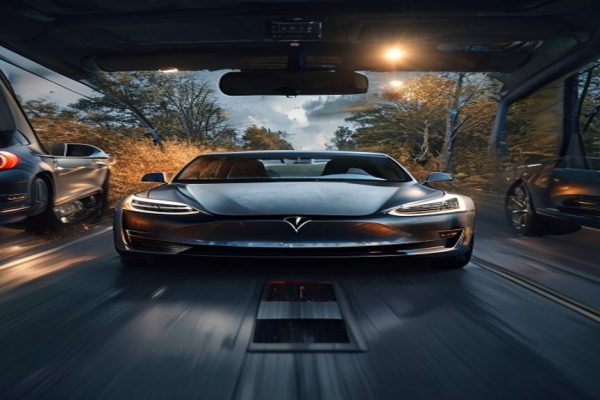
Image Prompt: A Tesla Model 3 driving on a highway with a warning light illuminated on the dashboard, symbolizing the need for human oversight and attention while using Autopilot mode.






Leave a Reply