Tesla Autopilot Under Fire Following Fatal Crash
The National Highway Traffic Safety Administration (NHTSA) is investigating a fatal car accident involving a Tesla Model 3 equipped with Autopilot. According to the preliminary findings, the driver of the vehicle had the accelerator pressed all the way to 100% at the time of the crash, raising concerns about the reliability and safety of Tesla’s semi-autonomous driving technology.
Background on Tesla Autopilot
Tesla’s Autopilot system is a suite of advanced driver-assistance systems (ADAS) designed to enhance vehicle safety and convenience. The system uses a combination of cameras, radar, and ultrasonic sensors to detect the vehicle’s surroundings and make adjustments to the vehicle’s speed and steering. Autopilot can perform tasks such as lane changing, lane keeping, and adaptive cruise control, but it is not a fully autonomous driving system.
In 2016, the NHTSA launched an investigation into Tesla’s Autopilot system after a series of accidents involving Model S vehicles. The investigation found that Autopilot was not responsible for the accidents, but it did identify several safety concerns related to the system’s design and implementation.
The Crash and Preliminary Findings
The fatal crash occurred on a rural road in the United States, where the Tesla Model 3 driver lost control of the vehicle and crashed into a tree. According to the NHTSA, the driver had the accelerator pressed to 100% at the time of the crash, which suggests that Autopilot may have malfunctioned or that the driver was not paying attention to the road.
The investigation is ongoing, and it is unclear whether Autopilot was functioning properly at the time of the crash. However, the incident has raised concerns about the safety and reliability of semi-autonomous driving systems like Autopilot.
Future Implications and Concerns
The Tesla Model 3 crash has sparked a renewed debate about the safety and reliability of semi-autonomous driving systems. While Autopilot has been involved in several accidents in the past, this incident highlights the potential risks associated with advanced driver-assistance systems.
As the use of semi-autonomous driving systems becomes more widespread, it is essential to address concerns about safety and reliability. Regulators and manufacturers must work together to develop and implement stricter safety standards for ADAS systems, ensuring that they are designed and tested to minimize the risk of accidents.
Key points to consider:
* The Tesla Model 3 crash has raised concerns about the safety and reliability of semi-autonomous driving systems like Autopilot.
* The NHTSA is investigating the incident to determine whether Autopilot malfunctioned or whether the driver was responsible for the crash.
* The incident highlights the potential risks associated with advanced driver-assistance systems.
* Regulators and manufacturers must work together to develop and implement stricter safety standards for ADAS systems.
Industry Reaction and Response
Tesla has not commented on the specific incident, but the company has been working to improve the safety and reliability of Autopilot. In recent months, Tesla has updated Autopilot to improve its performance and reduce the risk of accidents.
Other manufacturers, such as General Motors and Ford, have also developed semi-autonomous driving systems that are designed to enhance vehicle safety and convenience. However, the Tesla Model 3 crash serves as a reminder that the development and implementation of ADAS systems require careful consideration and attention to safety and reliability.
Conclusion
The Tesla Model 3 crash has sparked a renewed debate about the safety and reliability of semi-autonomous driving systems. As the use of ADAS systems becomes more widespread, it is essential to address concerns about safety and reliability. Regulators and manufacturers must work together to develop and implement stricter safety standards for ADAS systems, ensuring that they are designed and tested to minimize the risk of accidents.
The incident serves as a reminder that the development and implementation of advanced driver-assistance systems require careful consideration and attention to safety and reliability. By working together, we can ensure that semi-autonomous driving systems are designed and implemented to enhance vehicle safety and convenience, while minimizing the risk of accidents.
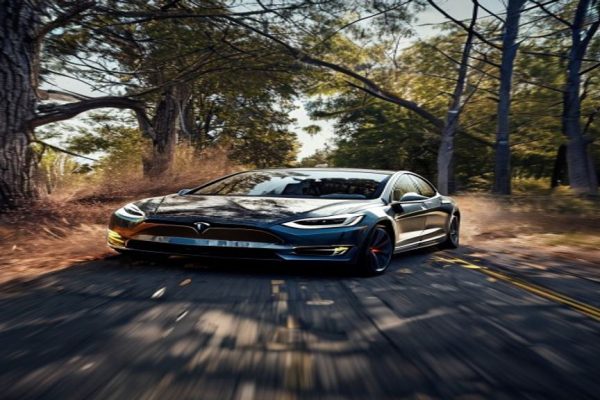
Image Prompt: A Tesla Model 3 driving on a rural road, with a tree in the background. The vehicle’s Autopilot system is engaged, with a subtle glow indicating its active status. The driver is not present in the vehicle, highlighting the risks associated with semi-autonomous driving systems. The image captures the serene and peaceful atmosphere of the rural road, while also conveying the sense of unease and concern associated with the incident.






Leave a Reply