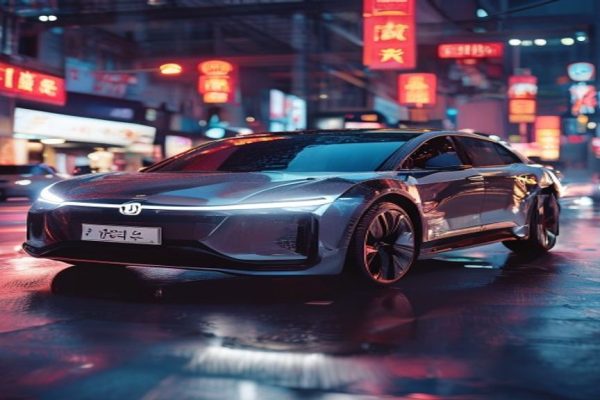
New Rule Sparks Controversy: Background on the Regulation
The recent denial of authorization to a Chinese-made autonomous vehicle maker has sent shockwaves through the tech industry, sparking concerns about the escalating trade tensions between the United States and China. The company in question, Smart Drive, had been developing advanced autonomous vehicles with cutting-edge software from China.
In response to growing security concerns and trade tensions, the US government introduced a new rule banning vehicles with software from China. The move aims to protect American companies and consumers from potential cybersecurity risks and intellectual property theft.
However, critics argue that the regulation unfairly targets Chinese companies and may have unintended consequences on the development of autonomous vehicles in the US.
Key Points on the Denial of Authorization
- The US government denied Smart Drive’s authorization under the new rule, citing security concerns and intellectual property theft.
- The company had been working on developing advanced autonomous vehicles with software from China.
- The new rule aims to protect American companies and consumers from potential cybersecurity risks and intellectual property theft.
- Critics argue that the regulation unfairly targets Chinese companies and may have unintended consequences on the development of autonomous vehicles in the US.
‘Tech Cold War’ Escalation: Implications for the Industry
The denial of authorization to Smart Drive marks the latest escalation in the ‘tech cold war’ between the US and China. The US government’s move to ban vehicles with Chinese software has raised concerns about the impact on the development of autonomous vehicles in the US.
Industry experts warn that the regulation may lead to a ‘brain drain’ of Chinese talent and technology, as well as a reduction in investment in autonomous vehicle research and development.
The ‘tech cold war’ has already led to a decline in US-China trade, with the US imposing restrictions on Chinese tech companies and China retaliating with its own set of restrictions.
As the tensions escalate, the US government is under pressure to balance its security concerns with the need to promote innovation and development in the tech sector.
The Smart Drive controversy highlights the complexities and challenges of regulating emerging technologies in an increasingly globalized world.
As the US and China continue to engage in a high-stakes struggle for tech dominance, one thing is clear: the future of autonomous vehicles hangs in the balance.
The outcome of this controversy will have far-reaching implications for the tech industry, trade relations between the US and China, and the development of autonomous vehicles globally.
What’s Next for Smart Drive and the Autonomous Vehicle Industry?
Smart Drive has vowed to challenge the US government’s decision in court, arguing that the new rule is unfair and discriminatory.
The company’s fate will likely depend on the outcome of the court case, which could set a precedent for the regulation of autonomous vehicles in the US.
Meanwhile, the US government is under pressure to provide clarity on its stance on autonomous vehicles, particularly those with Chinese software.
As the ‘tech cold war’ escalates, one thing is clear: the future of autonomous vehicles will be shaped by the complex interplay of security concerns, trade tensions, and innovation.






Leave a Reply