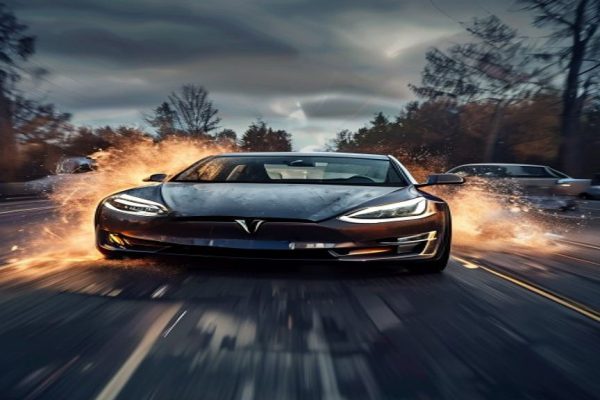
Fatal Tesla Crash Raises Questions on Autopilot Safety
A recent fatal crash involving a Tesla Model 3 driver has sparked a heated debate on the limitations of the electric vehicle’s Autopilot system. According to preliminary reports, the driver had the accelerator pressed all the way to 100% at the time of the accident, leading many to wonder if the Autopilot system failed to prevent the crash.
The incident occurred on a straight stretch of road, where the driver is believed to have lost control of the vehicle. While the National Highway Traffic Safety Administration (NHTSA) has not yet released a full investigation report, the incident has raised concerns about the reliability of Autopilot and its ability to prevent accidents.
Background on Tesla’s Autopilot System
Tesla’s Autopilot system is a advanced driver-assistance system (ADAS) that uses a combination of cameras, radar, and ultrasonic sensors to enable semi-autonomous driving. The system can take control of the vehicle in certain situations, such as on the highway, but it is not a fully autonomous system and requires driver attention at all times.
While Autopilot has been praised for its ability to improve safety and reduce driver fatigue, it has also been criticized for its limitations. Many experts have raised concerns about the system’s reliance on human input and its inability to handle complex driving scenarios.
The Future of Autopilot: Limitations and Potential Fixes
As the debate over Autopilot’s limitations continues, Tesla and other manufacturers are working to improve the system’s capabilities. One potential solution is the development of more advanced sensors and software that can better detect and respond to complex driving scenarios.
Another potential fix is the implementation of more stringent driver monitoring systems that can detect when a driver is not paying attention or is not following safe driving practices. This could include features such as eye-tracking cameras and driver attention sensors.
However, some experts argue that the root cause of the problem lies not with the technology itself, but with the way it is being marketed and used. Many drivers are lulled into a false sense of security by the Autopilot system’s advanced features, leading them to take their eyes off the road and become distracted.
To address this issue, Tesla and other manufacturers may need to re-evaluate their marketing strategies and provide clearer instructions on the proper use and limitations of Autopilot. This could include more prominent warnings about the system’s limitations and the need for driver attention at all times.
In conclusion, the fatal Tesla crash has highlighted the need for more advanced and reliable Autopilot systems. While the technology has made significant strides in recent years, it is clear that there is still much work to be done to ensure the safety of drivers and passengers.
As the debate over Autopilot’s limitations continues, it will be interesting to see how Tesla and other manufacturers respond to the challenge. Will they be able to develop more advanced and reliable systems, or will the limitations of Autopilot continue to be a source of concern for drivers and regulators alike?
Only time will tell, but one thing is certain: the future of Autopilot is bright, and it will be shaped by the collective efforts of manufacturers, regulators, and drivers alike.






Leave a Reply