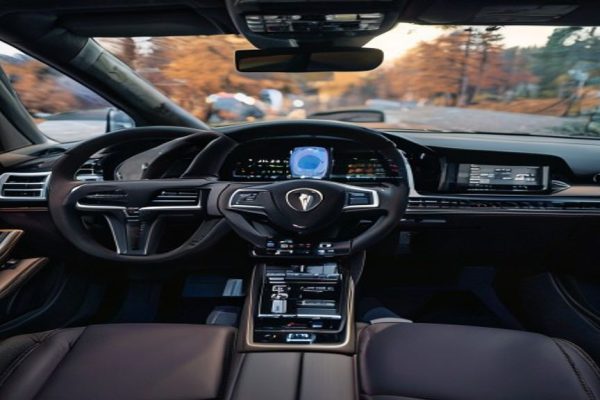
Tesla’s Autopilot System Under Scrutiny Again
The recent revelation that a Tesla Model 3 driver had the accelerator pedal pressed all the way to 100% has reignited safety concerns surrounding the Autopilot system. The incident, which is still under investigation, raises questions about the effectiveness of Tesla’s semi-autonomous driving technology and its potential to cause accidents.
How Does Autopilot Work?
Tesla’s Autopilot system is a advanced driver-assistance system (ADAS) designed to enable semi-autonomous driving on highways and other pre-mapped routes. The system uses a combination of cameras, radar, and ultrasonic sensors to detect and respond to the environment, allowing the vehicle to steer, accelerate, and brake automatically. However, the system relies heavily on human input and attention, and drivers are required to keep their hands on the wheel and their eyes on the road at all times.
Safety Concerns and Incidents
While Tesla’s Autopilot system has been praised for its ability to reduce driver distraction and fatigue, there have been several high-profile incidents involving the system, including multiple fatal crashes. In 2016, a Tesla Model S driver was killed in a crash while using Autopilot on a highway in Florida. In 2020, a Tesla Model 3 driver died in a crash while Autopilot was engaged in California. These incidents have raised concerns about the system’s ability to detect and respond to emergency situations, such as pedestrians, other vehicles, or road debris.
Investigations and Regulatory Action
The National Highway Traffic Safety Administration (NHTSA) and the National Transportation Safety Board (NTSB) have investigated several incidents involving Tesla’s Autopilot system. In 2020, the NHTSA launched a formal investigation into the safety of Autopilot, citing concerns about the system’s ability to detect and respond to emergency situations. The NHTSA has also sent a number of recall notices to Tesla owners, advising them to update their software to address potential safety issues.
The Future of Autopilot and Semi-Autonomous Driving
Despite the safety concerns surrounding Autopilot, Tesla remains committed to the development of semi-autonomous driving technology. The company has announced plans to introduce a new version of Autopilot, known as Full Self-Driving (FSD) Capability, which will enable vehicles to drive themselves in a variety of scenarios, including urban environments. However, the development and deployment of FSD Capability will require significant advances in sensor technology, software, and regulatory approval.
As the automotive industry continues to evolve towards greater levels of autonomy, it is essential that companies like Tesla prioritize safety and transparency in their development and testing processes. By doing so, they can help to build trust with consumers and regulators, and ensure that semi-autonomous driving technology is developed and deployed responsibly.
Key Points:
- The Tesla Model 3 driver had the accelerator pedal pressed all the way to 100% in a recent incident, raising safety concerns about the Autopilot system.
- Tesla’s Autopilot system is a advanced driver-assistance system (ADAS) designed to enable semi-autonomous driving on highways and other pre-mapped routes.
- There have been several high-profile incidents involving Tesla’s Autopilot system, including multiple fatal crashes.
- The NHTSA and NTSB have investigated several incidents involving Autopilot, citing concerns about the system’s ability to detect and respond to emergency situations.
- Tesla remains committed to the development of semi-autonomous driving technology, including Full Self-Driving (FSD) Capability.
In conclusion, the recent incident involving the Tesla Model 3 driver’s accelerator pedal highlights the need for greater transparency and accountability in the development and testing of semi-autonomous driving technology. As the industry continues to evolve towards greater levels of autonomy, it is essential that companies prioritize safety and regulatory compliance to ensure that consumers and regulators trust the technology.






Leave a Reply