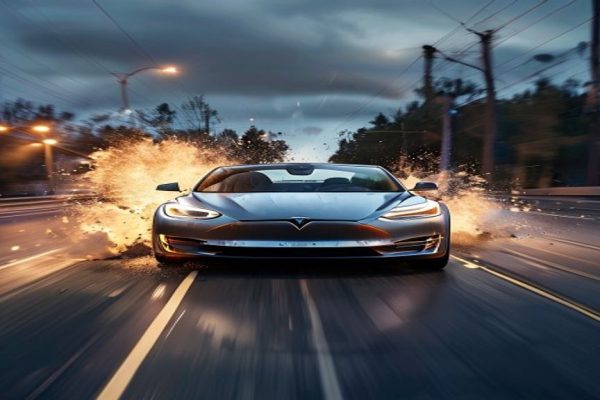
Tesla’s Autopilot System Under Scrutiny After High-Speed Crash
The recent high-speed crash involving a Tesla Model 3 has raised significant concerns about the safety and reliability of the electric vehicle manufacturer’s Autopilot system. According to reports, the driver had the accelerator pedal pressed to 100% capacity, which led to the vehicle reaching speeds of over 120 mph before losing control and crashing.
Background on Tesla’s Autopilot System
Tesla’s Autopilot system is a semi-autonomous driving technology that uses a combination of cameras, radar, and ultrasonic sensors to assist drivers with steering, acceleration, and braking. While the system has been praised for its capabilities, it has also been criticized for its limitations and potential for malfunction.
The Autopilot system relies on a network of cameras and sensors to detect and respond to various road conditions and obstacles. However, the system is not foolproof, and there have been several reported incidents of Autopilot malfunctioning or failing to respond to certain situations.
Investigation into High-Speed Crash Ongoing
The investigation into the high-speed crash is ongoing, and it remains unclear what caused the Autopilot system to malfunction. However, preliminary reports suggest that the driver may have been relying too heavily on the system, which could have contributed to the crash.
The National Highway Traffic Safety Administration (NHTSA) has launched an investigation into the crash, and Tesla has cooperated fully with the investigation. In a statement, Tesla said that it takes the safety of its customers very seriously and is committed to ensuring that its vehicles are safe and reliable.
The high-speed crash is a stark reminder of the potential risks associated with semi-autonomous driving technologies. While these systems have the potential to revolutionize the way we drive, they are not without their limitations and potential for malfunction.
Future Implications for Tesla and the Autonomous Vehicle Industry
The high-speed crash is likely to have significant implications for Tesla and the autonomous vehicle industry as a whole. If the investigation reveals that the Autopilot system was indeed at fault, it could lead to a re-evaluation of the safety and reliability of semi-autonomous driving technologies.
Regulators and lawmakers may also take a closer look at the safety standards for autonomous vehicles, potentially leading to new regulations and guidelines for the industry. Additionally, the crash could lead to increased scrutiny of Tesla’s Autopilot system, which may impact the company’s sales and reputation.
In conclusion, the high-speed crash involving a Tesla Model 3 has raised significant concerns about the safety and reliability of the Autopilot system. As the investigation continues, it is essential to take a closer look at the potential risks and limitations of semi-autonomous driving technologies and to ensure that they are designed and implemented with safety in mind.
Key Points:
- The high-speed crash involving a Tesla Model 3 has raised concerns about the safety and reliability of the Autopilot system.
- The investigation into the crash is ongoing, and it remains unclear what caused the Autopilot system to malfunction.
- The National Highway Traffic Safety Administration (NHTSA) has launched an investigation into the crash.
- The high-speed crash could have significant implications for Tesla and the autonomous vehicle industry as a whole.
- The crash highlights the potential risks and limitations of semi-autonomous driving technologies.






Leave a Reply