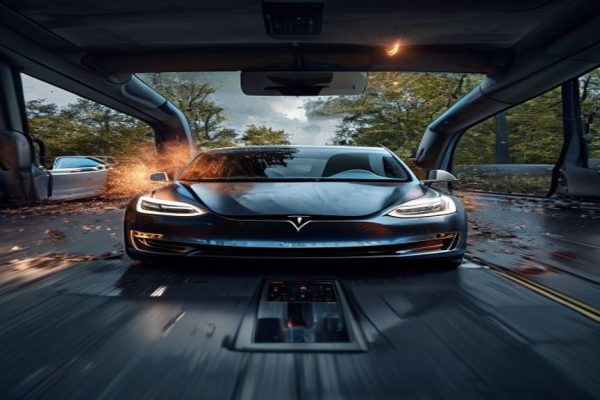
Fatal Crash Raises Questions About Tesla’s Autopilot System
A recent fatal crash involving a Tesla Model 3 has sparked renewed scrutiny of the company’s Autopilot system, highlighting concerns over driver dependence and accountability. According to reports, the driver had their foot on the accelerator pedal at maximum speed, 100%, while the vehicle was in Autopilot mode.
Background and Context: The Rise of Autonomous Vehicles
The rapid advancement of autonomous vehicle technology has been a significant focus for the automotive industry in recent years. Companies like Tesla, Waymo, and General Motors have invested heavily in developing and refining their Autopilot systems, which promise to reduce accidents and enhance the driving experience. However, as these systems become increasingly sophisticated, there are growing concerns about the level of driver dependence and accountability.
Autonomous vehicles use a combination of sensors, cameras, and mapping data to navigate roads and avoid obstacles. While these systems have shown impressive results in controlled environments, real-world scenarios can be far more complex, and the lack of human oversight has raised questions about the potential for catastrophic failures.
Investigation and Implications: What Does the Future Hold?
The investigation into the fatal Tesla crash is ongoing, but it has already raised several key questions about the Autopilot system and its limitations. The incident highlights the need for clearer guidelines and regulations around the use of autonomous vehicles, as well as the importance of ensuring that drivers understand the capabilities and limitations of these systems.
Industry experts warn that the increasing reliance on autonomous technology could lead to a false sense of security among drivers, who may become complacent and less attentive behind the wheel. This could have devastating consequences in the event of a system failure or unexpected encounter.
As the investigation continues, it is clear that the future of autonomous vehicles will require a delicate balance between technological advancement and human accountability. While the benefits of autonomous vehicles are undeniable, it is crucial that we prioritize the safety of drivers and passengers above all else.
Key points to consider:
- The Tesla crash highlights the need for clearer guidelines and regulations around the use of autonomous vehicles.
- The investigation has raised questions about the level of driver dependence and accountability in the face of technological advancements.
- The industry must prioritize the safety of drivers and passengers above the benefits of autonomous vehicles.
As the world continues to navigate the complex landscape of autonomous vehicles, one thing is clear: the future of transportation will require a collaborative effort between technology and human oversight.
Expert Analysis: What’s Next for Tesla and the Autonomous Vehicle Industry?
Industry analysts and experts are closely monitoring the investigation into the Tesla crash, which has sparked a renewed debate about the role of autonomous vehicles in the transportation sector. While Tesla has made significant strides in the development of its Autopilot system, the incident serves as a stark reminder of the potential risks and consequences associated with these technologies.
As the industry continues to evolve, it is essential that companies like Tesla prioritize transparency and accountability in their development and deployment of autonomous vehicles. Only through open communication and collaboration can we ensure that the benefits of these technologies are realized while minimizing the risks to drivers and passengers.
In conclusion, the fatal Tesla crash serves as a critical wake-up call for the autonomous vehicle industry. As we move forward, it is essential that we prioritize the safety of drivers and passengers above all else, while also acknowledging the significant benefits that these technologies can bring to the transportation sector.






Leave a Reply