Fatal Crash in Texas Raises Concerns Over Tesla’s Autopilot Technology
The recent crash in Katy, Texas, that left a woman dead has once again brought attention to the safety of Tesla’s driver-assistance technology, Autopilot. The incident, which occurred on June 19, has raised concerns about the reliability and limitations of the system.
According to reports, the crash happened at around 8:03 p.m. when Michael Butler, the driver of a Tesla Model S, lost control of the vehicle while driving on a rural road. The car struck a tree, resulting in fatal injuries to the woman, identified as 22-year-old Marla Acosta, a passenger in the vehicle.
The incident has sparked a debate about the safety of Autopilot, a semi-autonomous driving system developed by Tesla. The technology uses a combination of cameras, radar, and ultrasonic sensors to assist drivers, but it is not a fully autonomous driving system. Autopilot is designed to help drivers stay in their lane, maintain a safe distance, and even change lanes, but it requires human intervention to operate safely.
Background and Context of Autopilot Technology
Autopilot has been a part of Tesla’s vehicles since 2015, and it has undergone several updates since its introduction. The technology has been the subject of controversy in the past, with some users claiming that it is not reliable enough to handle certain driving scenarios. However, Tesla has consistently maintained that Autopilot is a safe and effective system, and that it has been responsible for numerous accidents being prevented.
In 2020, the National Highway Traffic Safety Administration (NHTSA) opened an investigation into Tesla’s Autopilot system after a series of crashes involving the technology. The investigation focused on the system’s ability to detect and respond to pedestrians, but it ultimately concluded that Autopilot was not at fault in any of the incidents.
Future Implications and Possible Regulatory Action
The fatal crash in Texas has once again raised concerns about the safety of Autopilot, and it is likely to lead to increased scrutiny from regulatory bodies. The NHTSA and other agencies may conduct further investigations into the technology, and they may even consider taking regulatory action if they determine that Autopilot is not safe enough for public use.
Additionally, the incident may also lead to increased pressure on Tesla to improve the safety and reliability of its Autopilot system. The company has already taken steps to update the technology, including the release of a new version of Autopilot that includes improved sensors and software.
In the wake of the fatal crash, Tesla has released a statement expressing its condolences to the family of Marla Acosta and acknowledging the incident. However, the company has not commented on the specific circumstances of the crash or the role of Autopilot in the incident.
Key Takeaways and Future Developments
- The fatal crash in Texas has raised concerns about the safety of Tesla’s Autopilot technology.
- Autopilot is a semi-autonomous driving system that uses cameras, radar, and ultrasonic sensors to assist drivers.
- The technology is not a fully autonomous driving system and requires human intervention to operate safely.
- The incident may lead to increased scrutiny from regulatory bodies and increased pressure on Tesla to improve the safety and reliability of Autopilot.
- Tesla has already taken steps to update Autopilot, including the release of a new version with improved sensors and software.
The incident in Texas serves as a reminder of the importance of safety in the development and deployment of autonomous driving technologies. As the industry continues to evolve, it is essential that manufacturers prioritize the safety and reliability of their systems to prevent incidents like this from occurring in the future.
This article will be updated as more information becomes available.
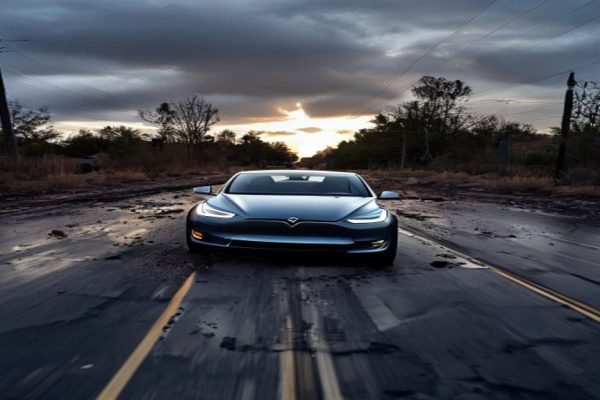
Image prompt: A Tesla Model S driving on a rural road at night, with a tree in the background. The car’s Autopilot system is engaged, and the driver is not paying attention to the road. The image should convey a sense of danger and uncertainty, highlighting the risks associated with the use of Autopilot in certain driving scenarios.






Leave a Reply