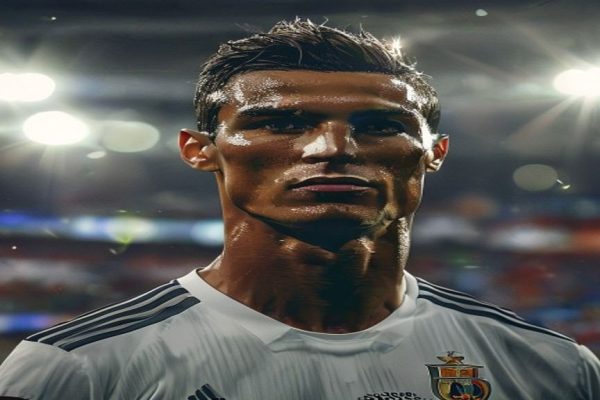
Ronaldo’s £80m Move to Real Madrid: A Watershed Moment in Football History
In an era where football superstars are often associated with astronomical transfer fees, few moves have had as profound an impact as Cristiano Ronaldo’s £80m switch from Manchester United to Real Madrid in 2009. The Portuguese forward’s arrival at the Santiago Bernabéu not only marked a significant milestone in his own career but also had far-reaching implications for the sport as a whole.
A New Era in Transfer Fees
The £80m fee paid by Real Madrid for Ronaldo’s services remains one of the most eye-watering transfer deals in football history. This record-breaking transfer sent shockwaves throughout the football world, with many questioning whether the Portuguese forward was worth such an astronomical sum. However, as Ronaldo’s subsequent performances for Real Madrid would go on to demonstrate, the investment proved to be well worth it.
The Ronaldo transfer also marked a turning point in the way football clubs approach transfer business. As the Portuguese forward’s fee continued to climb, other clubs began to push the boundaries of what was considered acceptable in terms of transfer spending. In the years that followed, the likes of Gareth Bale, Neymar, and Kylian Mbappé would all break the £100m barrier, with some clubs even spending significantly more on individual players.
A Shift in Power Dynamics
The Ronaldo transfer also had significant implications for the balance of power in European football. Real Madrid’s ability to attract and sign such a highly prized asset sent a clear message to the rest of the continent: they were the dominant force in the sport. The Galacticos’ era, which began in the early 2000s, had already seen the likes of Luís Figo, Zinedine Zidane, and David Beckham join the club, but Ronaldo’s arrival cemented Real Madrid’s status as the biggest club in the world.
This shift in power dynamics was further exacerbated by the emergence of other European superclubs, such as Manchester City and Paris Saint-Germain. These clubs, backed by wealthy owners and significant financial resources, began to challenge the dominance of the traditional European powerhouses, such as Barcelona and Manchester United. The Ronaldo transfer, therefore, marked the beginning of a new era in football, one in which the balance of power was constantly shifting and the likes of Real Madrid, Barcelona, and Manchester City would battle for supremacy.
A Lasting Legacy
Cristiano Ronaldo’s £80m move to Real Madrid marked the beginning of an extraordinary chapter in his illustrious career. The Portuguese forward went on to win an unprecedented five Ballon d’Or awards, four UEFA Champions League titles, and numerous other individual honors. His arrival at the Santiago Bernabéu also paved the way for other talented players to join the club, including Luka Modrić, Toni Kroos, and Karim Benzema.
Ronaldo’s legacy extends far beyond his own playing career, however. His transfer to Real Madrid marked a turning point in the way football clubs approach transfer business, with a focus on attracting the world’s best players and investing heavily in their squads. This approach has had a profound impact on the sport, with some clubs now spending hundreds of millions of pounds on individual players. Whether this is sustainable in the long term remains to be seen, but one thing is certain: Cristiano Ronaldo’s £80m move to Real Madrid will always be remembered as a watershed moment in football history.
Key Points:
- Ronaldo’s £80m transfer from Manchester United to Real Madrid in 2009 marked a significant milestone in his career and had far-reaching implications for the sport.
- The transfer fee set a new record, which would be broken numerous times in the years that followed.
- The Ronaldo transfer marked a turning point in the way football clubs approach transfer business, with a focus on attracting the world’s best players and investing heavily in their squads.
- The transfer also had significant implications for the balance of power in European football, cementing Real Madrid’s status as the biggest club in the world.






Leave a Reply