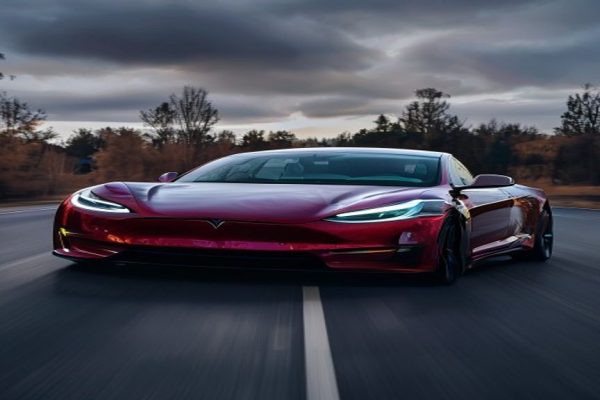
Tesla’s Full Self-Driving (FSD) Update Delay: A Blow to HW3 Owners
In a recent update, Tesla has announced that cars running on Hardware 3 (HW3) will not receive unsupervised Full Self-Driving (FSD) capabilities. This decision has left many Tesla owners on HW3 wondering what it means for their vehicles and the company’s plans for autonomous driving.
To understand the context behind this decision, it’s essential to look at the history of Tesla’s autonomous driving technology. Tesla’s FSD system has been in development for several years, with the company aiming to make its vehicles fully autonomous. However, the journey has been marked by setbacks, including several high-profile accidents and delays.
One of the primary reasons for the delay in FSD capabilities for HW3 cars is the complexity of the system. Tesla’s FSD system relies on a massive dataset of sensor data, which requires significant processing power. HW3, which is the current hardware configuration in most Tesla vehicles, may not be capable of handling the demands of FSD. In contrast, HW4, the latest hardware configuration, has been designed with FSD capabilities in mind.
So, what does this mean for Tesla owners on HW3? For now, it means that they will not have access to unsupervised FSD capabilities. This may be a disappointment for some owners who were looking forward to the convenience and safety of autonomous driving. However, it’s worth noting that Tesla has promised to continue updating its FSD software, and owners on HW3 will still receive incremental updates that improve the system’s performance.
Looking ahead, the delay in FSD capabilities for HW3 cars may have implications for Tesla’s autonomous driving strategy. The company may need to reassess its plans for HW3 vehicles and consider offering alternative solutions, such as semi-autonomous features, to make up for the lack of FSD capabilities.
The Future of Autonomous Driving: What’s Next for Tesla?
Tesla’s autonomous driving technology is a crucial aspect of its strategy to make its vehicles fully autonomous. While the delay in FSD capabilities for HW3 cars may be a setback, it’s not a death knell for the technology. In fact, it may be an opportunity for Tesla to re-evaluate its approach and focus on developing more robust and reliable autonomous driving systems.
One potential solution could be the use of edge computing, which involves processing data in real-time, at the edge of the network, rather than relying on centralized servers. This approach could allow HW3 cars to handle more complex tasks, such as FSD, without the need for significant hardware upgrades.
Another possibility is that Tesla may consider partnering with other companies to develop autonomous driving technology. This could involve collaborations with tech giants like Google or Microsoft, or even with traditional automakers like Ford or General Motors.
The Impact on Tesla’s Competitors
The delay in FSD capabilities for HW3 cars may have implications for Tesla’s competitors in the autonomous driving space. Companies like Waymo, Cruise, and Argo AI are all working on their own autonomous driving technologies, and some may see Tesla’s delay as an opportunity to gain ground.
However, it’s worth noting that Tesla’s autonomous driving technology is still one of the most advanced in the industry. The company’s use of computer vision, machine learning, and sensor fusion has allowed it to develop a system that is capable of handling complex tasks, such as navigating through urban environments.
In conclusion, the delay in FSD capabilities for HW3 cars is a setback for Tesla owners, but it’s not a fatal blow to the company’s autonomous driving strategy. Instead, it may be an opportunity for Tesla to re-evaluate its approach and focus on developing more robust and reliable autonomous driving systems.
As the autonomous driving space continues to evolve, it will be interesting to see how Tesla responds to the challenges and opportunities presented by this delay. One thing is certain, however: the future of autonomous driving is bright, and Tesla is still a key player in the game.
Key Points:
- Tesla’s FSD update for HW3 cars will not include unsupervised FSD capabilities.
- The delay is due to the complexity of the system and the limitations of HW3 hardware.
- Tesla owners on HW3 will still receive incremental updates that improve the system’s performance.
- The delay may have implications for Tesla’s autonomous driving strategy and its plans for HW3 vehicles.
- Alternative solutions, such as semi-autonomous features, may be offered to make up for the lack of FSD capabilities.
Image Prompt:
A futuristic rendering of a Tesla car driving autonomously through a city street, with a subtle glow emanating from the dashboard to indicate the presence of FSD technology. In the background, a silhouette of a cityscape at sunset, with buildings and skyscrapers stretching up towards the horizon.






Leave a Reply