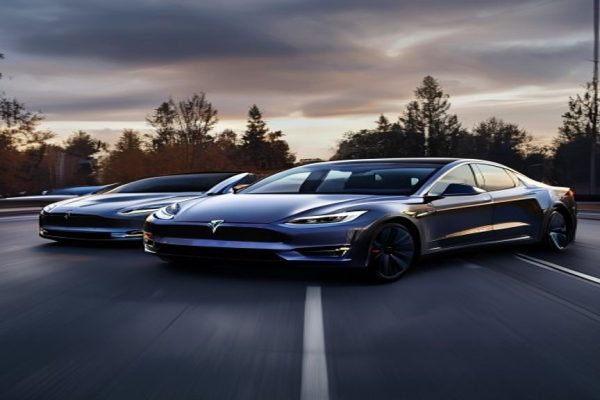
Tesla’s Full Self-Driving (FSD) Upgrade Halted for HW3 Cars
Tesla’s ambitious plans to roll out its Full Self-Driving (FSD) capability to its vehicles have hit a roadblock, specifically for those equipped with Hardware 3 (HW3). In a recent update, the electric vehicle (EV) manufacturer announced that cars on HW3 will not be receiving unsupervised FSD. This decision has left many owners and enthusiasts questioning the future of autonomous driving in Tesla’s lineup.
Background: Tesla’s FSD Vision
Tesla’s journey towards full autonomy began several years ago, with the company’s CEO, Elon Musk, promising an FSD system that would allow cars to navigate through complex road networks and traffic conditions without human intervention. The HW3 upgrade, introduced in 2019, was designed to support this goal, with a more powerful computer and improved sensors.
However, the development of FSD has been plagued by setbacks, delays, and controversy. Tesla has faced criticism for its lack of transparency regarding the testing and validation of its FSD system, as well as concerns over the safety of its vehicles operating in autonomous mode.
Why HW3 Cars Are Missing Out
According to Tesla, the decision to withhold unsupervised FSD from HW3 cars is due to the limitations of the hardware. While the HW3 upgrade provided a significant boost to the computer’s processing power, it may not be sufficient to support the complex algorithms and sensor fusion required for fully autonomous driving.
Additionally, Tesla may be prioritizing the development of its Full Self-Driving Computer (FSDC), which is expected to provide even greater capabilities and flexibility for its FSD system. The FSDC is currently being tested in select vehicles and is expected to become the standard hardware for Tesla’s autonomous driving system in the future.
Implications for Tesla Owners and the Autonomy Industry
The decision to delay unsupervised FSD for HW3 cars has significant implications for Tesla owners, who may have to wait longer for the full benefits of autonomous driving. It also raises questions about the timeline and feasibility of Tesla’s FSD ambitions, which have been a major selling point for the company’s vehicles.
The news may also have broader implications for the autonomy industry as a whole, as other manufacturers continue to develop their own FSD systems. While Tesla’s decision may be a setback, it highlights the complexities and challenges involved in creating truly autonomous vehicles.
- Tesla’s HW3 cars will not receive unsupervised Full Self-Driving (FSD) capability.
- The decision is due to limitations in the HW3 hardware and the company’s focus on developing its Full Self-Driving Computer (FSDC).
- The FSDC is expected to provide greater capabilities and flexibility for Tesla’s FSD system in the future.
- The delay may impact Tesla owners who were expecting the full benefits of autonomous driving.
- The news highlights the complexities and challenges involved in creating truly autonomous vehicles.
Conclusion
Tesla’s decision to withhold unsupervised FSD from HW3 cars is a significant development in the company’s journey towards full autonomy. While it may be a setback for some owners, it also underscores the complexities and challenges involved in creating truly autonomous vehicles. As the autonomy industry continues to evolve, one thing is clear: the path to full autonomy will be fraught with twists and turns.






Leave a Reply