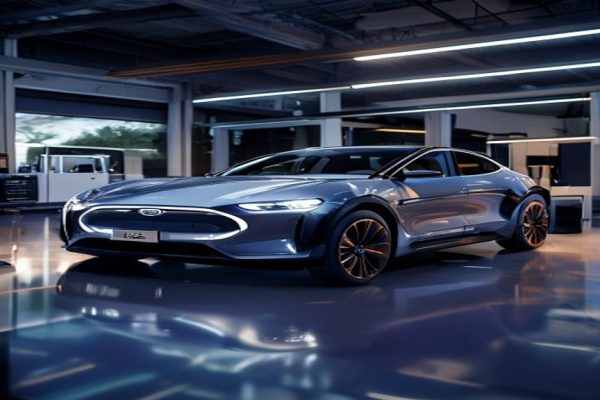
Inside the Lab where Ford is Revolutionizing Electric Vehicle Production
As the world transitions towards a more sustainable and environmentally friendly mode of transportation, electric vehicles (EVs) have emerged as a leading contender. However, one of the major hurdles to widespread adoption is the high cost associated with EVs. To address this issue, Ford, one of the leading automakers in the world, is pushing the boundaries of innovation in electric vehicle manufacturing.
A New Approach to Affordable EVs
Recently, Ford’s lab was abuzz with activity as the company’s engineers and researchers worked tirelessly to crack the code on cheap EVs. The goal was clear: to develop an electric vehicle that not only meets the performance expectations of consumers but also comes with an affordable price tag. To achieve this, the team turned to unibody construction, zonal architecture, and shorter wiring harnesses as the cornerstones of their design.
Unibody construction, a technique used in conventional vehicles, involves building the body and chassis as a single unit. This approach offers several advantages, including reduced weight, improved structural integrity, and lower manufacturing costs. By adopting this method for EVs, Ford aims to minimize the added expenses associated with traditional EV production, such as the use of heavy batteries and complex powertrains.
Zonal Architecture: A Game-Changer in EV Design
Another key innovation being explored by Ford is zonal architecture, a design approach that separates the vehicle’s electrical and electronic systems into distinct zones. This method allows for more efficient use of resources, reduced complexity, and improved reliability. By dividing the vehicle into smaller, more manageable sections, Ford’s engineers can optimize the placement of components, minimize wiring, and reduce the overall weight of the vehicle.
The benefits of zonal architecture extend beyond the technical realm. By streamlining the design and manufacturing process, Ford can also reduce production costs, making EVs more accessible to a wider audience.
Shorter Wiring Harnesses: A Key to Cost Savings
One of the most critical aspects of EV production is the wiring harness, a complex system of cables and connectors that enables the flow of electrical energy throughout the vehicle. Traditional EVs often feature extensive wiring harnesses, which can be both heavy and expensive. To combat this, Ford’s engineers are exploring the use of shorter wiring harnesses, which not only reduce weight but also minimize production costs.
By employing advanced materials and design techniques, Ford can create shorter, lighter wiring harnesses that maintain the same level of performance and reliability as their traditional counterparts. This breakthrough has the potential to significantly reduce the overall cost of EV production, making electric vehicles even more attractive to consumers.
The Future Implications of Ford’s Innovative Approach
The impact of Ford’s revolutionary approach to EV manufacturing will be far-reaching. By developing affordable electric vehicles that meet the needs of a wide range of consumers, the company can help accelerate the transition to a more sustainable transportation system. As the demand for EVs continues to grow, Ford’s innovative approach will be crucial in meeting this demand while also driving down costs.
Furthermore, the company’s commitment to innovation and sustainability will likely set a new standard for the industry, pushing other manufacturers to adopt similar approaches and driving the development of even more advanced electric vehicles.
In conclusion, Ford’s lab is on the cusp of a major breakthrough in electric vehicle manufacturing. By leveraging proven manufacturing techniques, such as unibody construction, zonal architecture, and shorter wiring harnesses, the company is poised to make EVs more affordable and accessible to a wider audience. As the world continues to shift towards a more sustainable future, Ford’s innovative approach will play a critical role in shaping the transportation landscape of tomorrow.






Leave a Reply