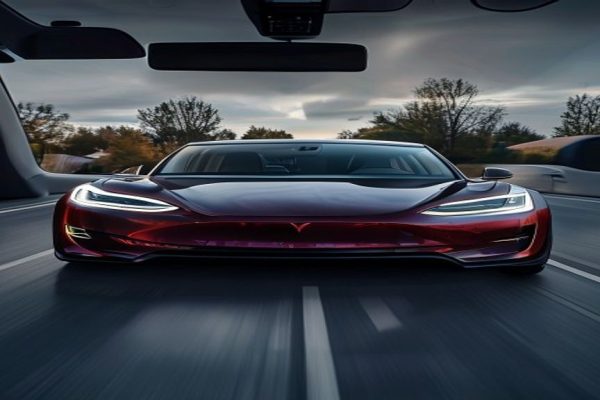
Tesla’s Autopilot Upgrade: A Setback for HW3 Owners
In a recent announcement, Tesla revealed that cars equipped with Hardware 3 (HW3) will not be eligible for unsupervised Full Self-Driving (FSD) capabilities. This news has sent shockwaves through the tech-savvy community, leaving many to wonder what this means for the future of Tesla’s Autopilot system.
For those unfamiliar, Tesla’s Autopilot system is a suite of advanced driving features that use a combination of cameras, radar, and ultrasonic sensors to enable semi-autonomous driving. The system has undergone several upgrades over the years, with each iteration bringing new features and capabilities. However, the HW3 update has been touted as a major leap forward, with the potential to enable fully autonomous driving.
However, it appears that this upgrade will not be enough to support unsupervised FSD. This is a significant setback for HW3 owners, who were likely expecting to upgrade to a more advanced level of Autopilot functionality.
The Reason Behind This Decision
According to Tesla, the decision not to enable unsupervised FSD on HW3 is due to the limitations of the current hardware. In a statement, Tesla explained that the HW3 system is not capable of processing the vast amounts of data required for fully autonomous driving.
This news has sparked debate among tech enthusiasts, with some arguing that Tesla is simply trying to create a artificial sense of urgency around the HW4 update, which is rumored to be in development. Others have pointed out that the HW3 system is still a highly advanced piece of technology, capable of enabling semi-autonomous driving in a variety of scenarios.
The Future of Self-Driving Technology
Despite this setback for HW3 owners, Tesla’s Autopilot system remains one of the most advanced in the industry. The company’s continued investment in autonomous driving technology is a testament to its commitment to making transportation safer and more efficient.
As the world moves towards a more autonomous future, it’s clear that companies like Tesla will play a crucial role in shaping the industry. While the decision not to enable unsupervised FSD on HW3 is a disappointment for some, it’s also a reminder of the challenges and complexities involved in developing fully autonomous driving systems.
Key Takeaways:
- Tesla’s Autopilot system will not be enabled on HW3 for unsupervised FSD.
- The decision is due to the limitations of the HW3 system, which is not capable of processing the vast amounts of data required for fully autonomous driving.
- Tesla is committed to investing in autonomous driving technology and will continue to develop and improve its Autopilot system.
What This Means for Tesla Owners
For HW3 owners, this news may be a disappointment, but it’s not a complete loss. The HW3 system is still capable of enabling semi-autonomous driving in a variety of scenarios, and Tesla is committed to continuing to improve and update its Autopilot system.
In the long term, this setback may actually be a blessing in disguise. By holding off on enabling unsupervised FSD on HW3, Tesla is able to focus on developing a more robust and reliable system that will better serve its customers.
As the world moves towards a more autonomous future, it’s clear that companies like Tesla will play a crucial role in shaping the industry. By staying ahead of the curve, Tesla is positioning itself for long-term success in the rapidly evolving world of autonomous driving.






Leave a Reply