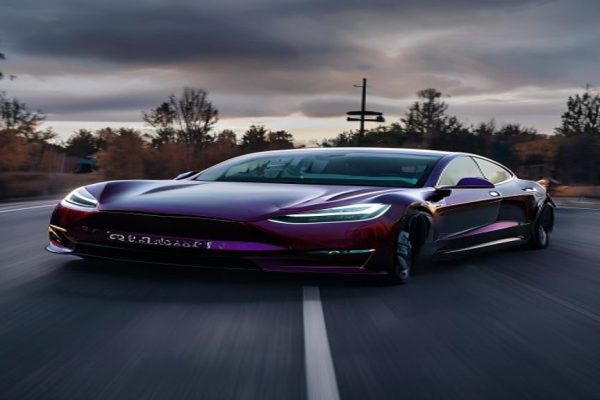
Tesla’s FSD Update: A Setback for HW3 Owners
In a recent announcement, Tesla revealed that its Full Self-Driving (FSD) feature will not be available for unsupervised use on cars equipped with Hardware 3 (HW3). This development has left many HW3 owners disappointed, as they had been eagerly awaiting the update. The decision to delay the feature highlights the complexities and challenges associated with developing autonomous driving technology.
Tesla’s FSD is one of the most advanced autonomous driving systems on the market, utilizing a combination of cameras, sensors, and software to enable vehicles to navigate complex road scenarios. However, the company has been cautious in rolling out the feature, prioritizing safety and reliability. The decision to limit FSD to supervised use on HW3 cars suggests that Tesla is taking a more conservative approach to implementing autonomous driving technology.
The delay in FSD deployment is attributed to the difficulties in developing algorithms that can handle complex scenarios, such as construction zones, pedestrians, and other vehicles. Tesla’s FSD system requires a significant amount of data and testing to ensure its reliability and accuracy. The company’s focus on supervised use on HW3 cars indicates that it is committed to delivering a safe and reliable experience for its customers.
The Future of Autonomous Driving: Challenges and Opportunities
The development of autonomous driving technology is a complex and multifaceted challenge. While companies like Tesla are making significant strides in this area, there are still many obstacles to overcome. The lack of standardization in autonomous driving systems, combined with the need for extensive testing and validation, has slowed the adoption of this technology.
However, the potential benefits of autonomous driving are substantial. Improved safety, increased mobility for the elderly and disabled, and enhanced traffic efficiency are just a few of the advantages of this technology. As the world becomes increasingly urbanized, the demand for autonomous driving solutions is likely to grow.
Companies like Waymo, Cruise, and Argo AI are also working towards developing and deploying autonomous driving systems. These companies are investing heavily in research and development, with a focus on creating safe and reliable solutions. The autonomous driving market is expected to reach $7 trillion by 2050, making it one of the most significant technological advancements of the century.
What’s Next for Tesla and FSD?
Tesla’s decision to delay FSD on HW3 cars is a setback for some owners, but it also underscores the company’s commitment to safety and reliability. The company is expected to continue testing and refining its FSD system, with a focus on supervised use on HW3 cars.
In the near term, Tesla is likely to continue deploying FSD in a phased manner, with a focus on specific regions and road types. The company’s approach to autonomous driving is data-driven, with a focus on gathering and analyzing large amounts of data to improve the system’s accuracy and reliability.
As the autonomous driving landscape continues to evolve, Tesla remains at the forefront of innovation. The company’s focus on FSD and its commitment to safety and reliability make it an attractive option for customers seeking a seamless and autonomous driving experience.
- Tesla’s FSD update will not be available for unsupervised use on HW3 cars.
- The company is prioritizing safety and reliability in its autonomous driving system.
- Tesla is expected to continue testing and refining its FSD system.
- The autonomous driving market is expected to reach $7 trillion by 2050.






Leave a Reply