Inside the Lab Where Ford is Revolutionizing Electric Vehicles
As the world grapples with the challenges of climate change and environmental degradation, the automotive industry is shifting towards electric vehicles (EVs) as a sustainable alternative to traditional fossil fuel-powered cars. However, the high cost of EVs remains a significant barrier to widespread adoption. In a bid to crack the code on affordable EVs, Ford is pushing the boundaries of innovation in its labs.
Unibody Architecture: A Game-Changer in Vehicle Design
One of the key strategies Ford is employing to reduce the cost of EVs is the adoption of unibody architecture. Unlike traditional body-on-frame designs, unibody architecture integrates the body and chassis into a single unit, eliminating the need for a separate frame. This design approach not only reduces weight but also enhances safety and handling.
By leveraging unibody architecture, Ford aims to create more efficient and cost-effective EVs that can compete with traditional gasoline-powered cars in terms of price. The company is already seeing significant benefits from this approach, with reduced production costs and improved vehicle performance.
Zonal Architecture: Optimizing Performance and Efficiency
Another innovative approach Ford is exploring is zonal architecture, which involves dividing the vehicle into distinct zones, each with its own electrical power architecture. This design enables the company to optimize performance and efficiency while minimizing waste and reducing costs.
With zonal architecture, Ford can tailor the electrical system to meet the specific needs of each zone, resulting in a more efficient and cost-effective EV. This approach also allows for greater flexibility in designing vehicles that can accommodate various battery types and sizes.
Shorter Wiring Harnesses: A Simple yet Effective Solution
One of the simplest yet most effective innovations Ford is introducing is the use of shorter wiring harnesses. By reducing the length of the wiring harness, the company can minimize electrical resistance and heat generation, resulting in improved efficiency and reduced costs.
Shorter wiring harnesses also enable Ford to simplify the electrical system, reducing the complexity and cost of production. This approach is particularly beneficial for EVs, where electrical systems are more critical than in traditional gasoline-powered cars.
Future Implications and Challenges
As Ford continues to push the boundaries of innovation in EV design and production, several challenges lie ahead. One of the primary concerns is the scalability of these new approaches, as the company looks to mass-produce affordable EVs that meet the demands of a rapidly growing market.
Another challenge is the need for industry-wide standardization, as different manufacturers adopt varying approaches to EV design and production. This lack of standardization can create confusion among consumers and complicate the supply chain.
Conclusion
In conclusion, Ford’s innovative approach to affordable EVs is a significant step towards making sustainable mobility a reality. By leveraging unibody architecture, zonal architecture, and shorter wiring harnesses, the company is poised to revolutionize the EV industry and make electric vehicles more accessible to the masses.
As the world continues to grapple with the challenges of climate change and environmental degradation, the need for innovative solutions like Ford’s affordable EVs has never been more pressing. With its commitment to sustainable mobility, Ford is leading the charge towards a more environmentally friendly future.
Key Takeaways
- Unibody architecture reduces weight, enhances safety, and improves handling.
- Zonal architecture optimizes performance, efficiency, and reduces costs.
- Shorter wiring harnesses minimize electrical resistance, heat generation, and simplify the electrical system.
- Ford’s innovative approaches aim to make EVs more affordable and accessible to the masses.
- Scalability and industry-wide standardization are key challenges for Ford and the EV industry as a whole.
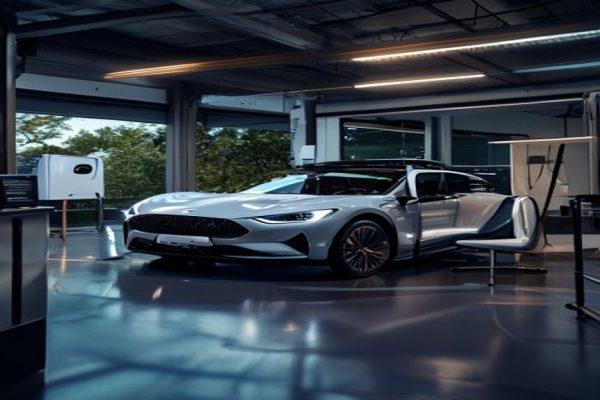
Image Prompt: A detailed illustration of a Ford EV with a sleek, futuristic design, showcasing the unibody architecture and zonal electrical system. The vehicle is depicted in a modern, urban setting, with a green background representing sustainability and eco-friendliness.






Leave a Reply