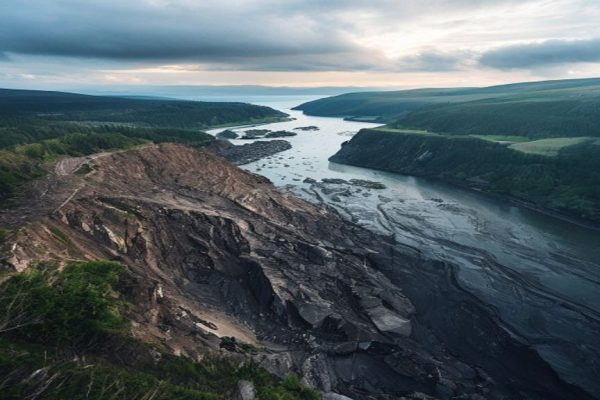
Massive Landslide Strikes Alaska’s Tracy Arm Fjord
On the morning of August 10, 2025, a devastating landslide struck Alaska’s Tracy Arm fjord, a scenic destination known for its breathtaking glaciers and majestic waterfalls. The landslide, which is estimated to be one of the largest in recent history, triggered a 1,578-foot-tall (481-meter-tall) mega-tsunami that crashed into the surrounding waters, sending shockwaves throughout the global community.
Background and Context
Located within the Tongass National Forest, Tracy Arm fjord is a narrow, glacier-carved waterway that stretches approximately 30 miles (48 kilometers) into the heart of the Alaskan wilderness. This picturesque destination is a favorite among cruise lines, attracting thousands of tourists each year who come to marvel at its natural beauty. However, the fjord’s remote location and harsh climate make it prone to natural disasters, including landslides and earthquakes.
The area is known for its unstable geology, with steep cliffs and unstable rock formations that can be triggered by seismic activity, heavy rainfall, or even human activity. In recent years, there have been several smaller landslides and rockfalls in the area, but the August 10 disaster was of a much larger scale.
Reasons Behind the Landslide
Scientists are still studying the cause of the landslide, but preliminary reports suggest that it was triggered by a combination of factors, including heavy rainfall and seismic activity. The area experienced an unusual bout of heavy rainfall in the days leading up to the landslide, which may have weakened the rock formations and made them more susceptible to collapse.
Additionally, researchers believe that the landslide may have been exacerbated by the presence of an underwater volcano, which is known to have been active in the area. The volcano’s seismic activity may have contributed to the destabilization of the surrounding rock, making it more prone to failure.
Future Implications and Response
The landslide has sent shockwaves throughout the global community, with far-reaching implications for the tourism industry, the environment, and local communities. The disaster has raised concerns about the safety of cruise lines operating in the area and the potential for future landslides.
Government agencies and emergency responders are working tirelessly to assess the damage and provide support to affected communities. The US Coast Guard has dispatched a team to the area to assist with search and rescue operations, while local authorities are working to contain the environmental impact of the disaster.
In the wake of the landslide, there are concerns about the long-term effects on the environment and local ecosystems. The fjord’s delicate ecosystem is home to a range of endangered species, including humpback whales, sea lions, and bald eagles. The potential for oil spills, pollution, and habitat disruption is a major concern, and experts are working to mitigate these risks.
The landslide is also expected to have significant economic implications, with the potential for millions of dollars in damages and losses to the tourism industry. Cruise lines are likely to reevaluate their routes and itineraries in the wake of the disaster, which could have far-reaching consequences for local communities that rely on tourism.
Key Points:
- The landslide struck Alaska’s Tracy Arm fjord on August 10, 2025, triggering a 1,578-foot-tall (481-meter-tall) mega-tsunami.
- The area is known for its unstable geology, with steep cliffs and unstable rock formations.
- Scientists believe that the landslide was triggered by a combination of heavy rainfall and seismic activity.
- The disaster has raised concerns about the safety of cruise lines operating in the area and the potential for future landslides.
- Government agencies and emergency responders are working to assess the damage and provide support to affected communities.






Leave a Reply