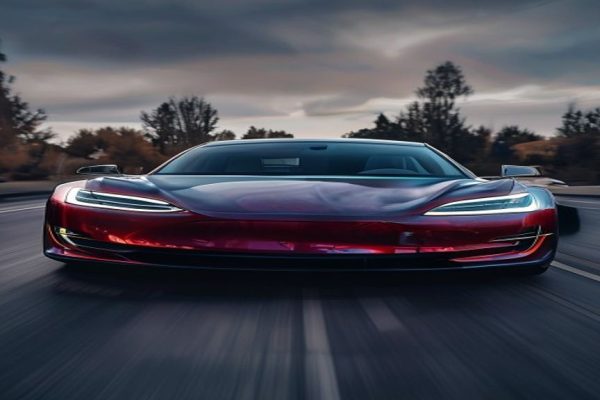
Tesla’s FSD Update: A Major Shift in Autonomous Driving
Tesla has made a significant announcement regarding its Full Self-Driving (FSD) technology, which has left many existing owners of the HW3 hardware wondering what the future holds. In a recent update, Tesla revealed that cars equipped with the HW3 hardware will not be eligible for unsupervised FSD capabilities. In this article, we will delve into the background and context of this decision, exploring the reasons behind it and what it means for existing owners.
What is FSD and HW3?
For those unfamiliar, FSD is Tesla’s advanced driver-assistance system (ADAS) that enables its vehicles to drive autonomously. The system relies on a combination of cameras, radar, and ultrasonic sensors to navigate the road and make decisions in real-time. HW3, on the other hand, refers to the third hardware version of the Autopilot computer used in Tesla’s vehicles. It is the precursor to the more advanced HW4 hardware, which is currently being rolled out in newer Tesla models.
FSD has been a highly anticipated feature in Tesla’s vehicles, with many owners eagerly awaiting its release. However, the company has been cautious in its rollout, citing the need for further refinement and testing to ensure the system’s safety and efficacy. While FSD has demonstrated impressive capabilities in various scenarios, its deployment has been limited to specific use cases and geographic regions.
Why the FSD Update for HW3?
So, why has Tesla decided to restrict FSD capabilities on HW3 hardware? According to sources, the primary reason is the limitations of the HW3 hardware itself. While HW3 is capable of processing data in real-time, its processing power and memory capacity are not sufficient to handle the complex computational demands of FSD.
Tesla’s decision to restrict FSD on HW3 hardware is likely a result of the company’s desire to maintain the highest level of safety and reliability. By limiting FSD capabilities on HW3, Tesla can ensure that its vehicles continue to meet the stringent safety standards required for public deployment. Additionally, this decision may also serve as a means to differentiate the HW3 hardware from the more advanced HW4, which is better equipped to handle the demands of FSD.
What Does this Mean for Existing Owners?
The FSD update for HW3 owners has sparked concerns and confusion among existing Tesla owners. While the news may be disappointing for those eagerly awaiting FSD capabilities, it is essential to note that Tesla has not entirely ruled out FSD for HW3 hardware. The company has hinted at the possibility of upgrading existing vehicles to HW4 or HW4.5, which would enable FSD capabilities.
However, for those who are not eligible for an upgrade or prefer not to wait, Tesla has offered alternative solutions. The company has introduced a new feature called ‘Enhanced Autopilot,’ which provides improved semi-autonomous capabilities, including lane-keeping and adaptive cruise control. While not as advanced as FSD, Enhanced Autopilot still offers significant benefits for drivers, making it a viable alternative for those who cannot upgrade to HW4 or HW4.5.
Looking Ahead: Implications for the Industry
The FSD update for HW3 owners has significant implications for the autonomous driving industry as a whole. As the technology continues to advance, we can expect to see more sophisticated ADAS systems being developed and deployed. However, the challenges associated with HW3 hardware highlight the importance of careful planning and testing to ensure the safety and efficacy of these systems.
Tesla’s decision to restrict FSD capabilities on HW3 hardware serves as a reminder that the development of autonomous driving technology is a complex and iterative process. As the industry continues to evolve, we can expect to see more announcements and updates regarding FSD and other ADAS systems. By staying informed and up-to-date, existing owners and enthusiasts can make informed decisions about their vehicles and the future of autonomous driving.
In conclusion, Tesla’s FSD update for HW3 owners marks a significant shift in the company’s approach to autonomous driving. While the news may be disappointing for some, it highlights the importance of careful planning and testing to ensure the safety and efficacy of these systems. As the industry continues to advance, we can expect to see more sophisticated ADAS systems being developed and deployed, and Tesla’s decision serves as a reminder that the development of autonomous driving technology is a complex and iterative process.
Key Points:
- Tesla has announced that cars equipped with the HW3 hardware will not be eligible for unsupervised FSD capabilities.
- The primary reason for this decision is the limitations of the HW3 hardware itself.
- Tesla has hinted at the possibility of upgrading existing vehicles to HW4 or HW4.5, which would enable FSD capabilities.
- The company has introduced a new feature called ‘Enhanced Autopilot,’ which provides improved semi-autonomous capabilities.
- The FSD update has significant implications for the autonomous driving industry, highlighting the importance of careful planning and testing.
Image Prompt: A Tesla Model S on the road, with the FSD logo prominently displayed on the dashboard. The car is navigating through a busy city, with other vehicles and pedestrians around it. The image should convey a sense of autonomy and sophistication, while also highlighting the importance of safety and reliability in autonomous driving technology.






Leave a Reply