Tesla Scraps Unsupervised FSD for HW3 Cars: A Major Shift in Autonomous Tech
In a significant development that is set to impact the electric vehicle (EV) industry, Tesla has announced that it will not be rolling out unsupervised Full Self-Driving (FSD) capabilities for its cars equipped with Hardware 3 (HW3). The decision marks a major shift in the company’s approach to autonomous technology and has significant implications for EV owners and the industry as a whole.
What is Hardware 3?
Tesla’s Hardware 3 is the latest iteration of the company’s computer systems designed to power its vehicles’ autonomous features. Introduced in 2016, HW3 is a significant upgrade over its predecessor, HW2, offering improved processing power and more advanced sensor capabilities. While HW3 has been instrumental in enabling many of Tesla’s advanced safety and convenience features, such as Autopilot and Smart Summon, it has also been criticized for its limitations when it comes to more complex autonomous tasks.
What Does the Lack of Unsupervised FSD Mean for HW3 Cars?
The decision to scrap unsupervised FSD for HW3 cars is a significant setback for Tesla owners who were eagerly awaiting the next level of autonomous capabilities. While Tesla’s Autopilot system is still considered one of the most advanced on the market, it requires constant driver attention and intervention. The lack of unsupervised FSD means that HW3 cars will not be able to drive themselves without human input, at least not for the foreseeable future.
This decision may be attributed to the challenges Tesla faces in perfecting the complex task of autonomous driving. Despite significant advancements in computer vision, sensor technology, and machine learning algorithms, the industry still grapples with issues related to edge cases, sensor calibration, and software updates. HW3 cars may require more advanced hardware or software to support unsupervised FSD, which Tesla may choose to develop in the future.
What Does This Mean for the Future of Autonomous Tech?
While the lack of unsupervised FSD for HW3 cars may be a disappointment for some, it is also a reminder of the significant challenges and complexities involved in developing autonomous technology. As the industry continues to push the boundaries of what is possible, it is essential to prioritize safety and reliability over speed and convenience.
However, this setback should not deter companies like Tesla from continuing to invest in autonomous tech. The potential benefits of self-driving cars are vast, including improved road safety, increased mobility for the elderly and disabled, and enhanced productivity for commuters. As the industry continues to learn and adapt, we can expect to see significant advancements in the coming years.
Key Takeaways:
- Tesla has announced that it will not be rolling out unsupervised Full Self-Driving (FSD) capabilities for its HW3 cars.
- The decision is attributed to the challenges Tesla faces in perfecting autonomous driving, including edge cases, sensor calibration, and software updates.
- The lack of unsupervised FSD may be a setback for HW3 car owners, but it should not deter companies from continuing to invest in autonomous tech.
- The potential benefits of self-driving cars are vast, including improved road safety, increased mobility, and enhanced productivity.
As we look to the future, it is clear that autonomous technology will continue to play a significant role in shaping the automotive industry. While the road ahead may be complex and challenging, it is also filled with opportunities for innovation and growth.
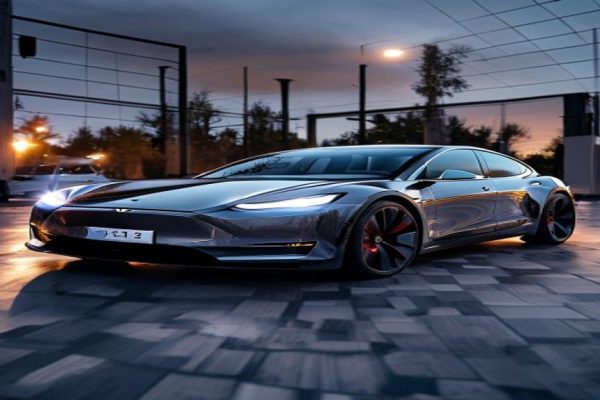
Image Prompt: A futuristic depiction of a Tesla car driving autonomously on a highway, with a cityscape in the background. The car is equipped with a sleek and modern design, with a prominent display screen showcasing the navigation and safety features.






Leave a Reply