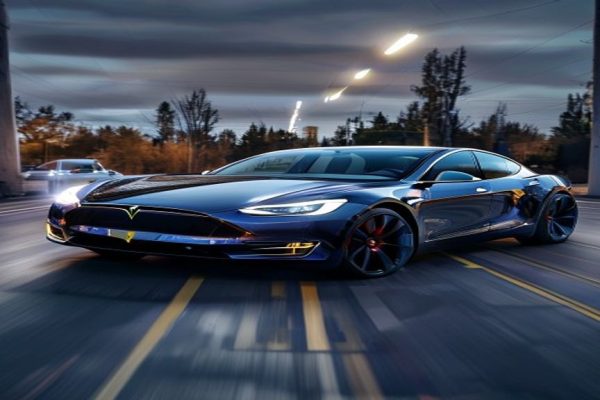
Tesla’s FSD Update: A Shift in Autonomous Driving Strategy
Tesla’s decision to scrap the plan for unsupervised Full Self-Driving (FSD) on Hardware 3 (HW3) has sent shockwaves through the tech industry and the autonomous driving community. This move marks a significant shift in Tesla’s strategy, reflecting the company’s growing understanding of the complexities involved in developing fully autonomous vehicles.
Background on FSD and HW3
For those unfamiliar, Tesla’s Full Self-Driving (FSD) technology is a suite of advanced driver-assistance systems (ADAS) designed to enable autonomous driving. The company has been working on perfecting this technology for years, with a focus on Hardware 3 (HW3), a more advanced version of the hardware that powers FSD.
HW3 is designed to handle more complex driving scenarios and provide a higher level of autonomy. However, the company’s decision to scrap unsupervised FSD on HW3 suggests that the technology is still in its early stages and requires significant refinement before it can be trusted to operate without human oversight.
Reasons Behind the Decision
According to industry insiders, Tesla’s decision to scrap unsupervised FSD on HW3 is largely due to the complexity of the driving scenarios that the technology is expected to handle. The company’s FSD system is designed to navigate a wide range of driving environments, from urban roads to highways and everything in between.
However, the company’s testing data has shown that the technology is still prone to errors, particularly in situations that require human judgment and intervention. This has led Tesla to reevaluate its approach to FSD, focusing instead on developing a more robust and reliable system that can operate within the bounds of human safety.
Future Implications and Next Steps
The implications of Tesla’s decision are far-reaching, with potential consequences for the company’s stock price, investor confidence, and the broader autonomous driving industry.
However, the move also reflects a growing recognition within the industry that developing fully autonomous vehicles is a more complex task than previously thought. As a result, companies like Tesla are rethinking their strategies, focusing on more incremental approaches to autonomous driving that prioritize safety and reliability.
Looking ahead, Tesla is likely to continue investing in its FSD technology, with a focus on refining the system to operate within the bounds of human safety. This may involve a more gradual rollout of FSD features, with a greater emphasis on testing and validation to ensure that the technology is safe and reliable.
Ultimately, Tesla’s decision to scrap unsupervised FSD on HW3 marks a turning point in the company’s approach to autonomous driving. While the move may be seen as a setback for some, it also reflects a growing recognition within the industry of the complexities involved in developing fully autonomous vehicles.
Key Takeaways
- Tesla has scrapped its plan for unsupervised Full Self-Driving (FSD) on Hardware 3 (HW3).
- The decision reflects a growing recognition within the industry of the complexities involved in developing fully autonomous vehicles.
- Tesla is likely to continue investing in its FSD technology, with a focus on refining the system to operate within the bounds of human safety.
- The company’s approach to FSD will likely involve a more gradual rollout of features, with a greater emphasis on testing and validation.






Leave a Reply