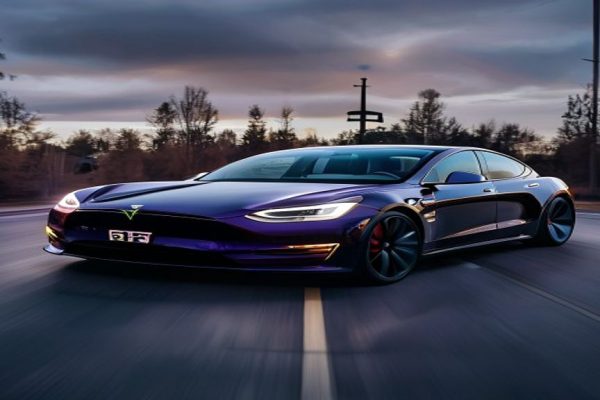
Tesla’s Full Self-Driving Update Delayed for HW3 Vehicles
Tesla has announced that vehicles equipped with its Hardware 3 (HW3) computer will not receive the Full Self-Driving (FSD) update, at least not in an unsupervised capacity. This decision marks a significant development in the company’s autonomous driving ambitions, and it raises important questions about the capabilities and limitations of its current technology.
Background and Context
Tesla has been at the forefront of the autonomous driving revolution, with its FSD update aiming to enable vehicles to navigate complex roads and situations without human intervention. However, the company has been facing significant challenges in perfecting this technology, including issues related to mapping, object detection, and edge cases.
The HW3 computer is Tesla’s latest hardware offering, designed to support more advanced features like FSD. However, the company has now confirmed that vehicles equipped with this hardware will not receive the FSD update in its current form. This decision suggests that Tesla is still grappling with the complexities of autonomous driving and is not yet ready to deploy its technology in a fully unsupervised capacity.
What This Means for Owners
For Tesla owners with HW3 vehicles, this news may come as a disappointment. Many had been eagerly awaiting the FSD update, which promised to revolutionize their driving experience. However, the delay is likely to be a minor setback for most owners, who will still be able to access other advanced features like Autopilot and Navigate on Autopilot.
The delay also raises important questions about the timeline for FSD development. Tesla has already faced criticism for its ambitious timelines and promises, and this latest setback may lead to further scrutiny from investors and regulators.
However, it’s worth noting that Tesla is still committed to delivering FSD in the future. In a statement, the company emphasized its dedication to perfecting its autonomous driving technology and enabling vehicles to drive themselves without human intervention. While the timeline for this achievement remains uncertain, it’s clear that Tesla is committed to pushing the boundaries of what’s possible in autonomous driving.
Key Takeaways
- Tesla has delayed the FSD update for HW3 vehicles, citing ongoing challenges with autonomous driving technology.
- This decision marks a significant development in Tesla’s autonomous driving ambitions and raises important questions about the capabilities and limitations of its current technology.
- For Tesla owners with HW3 vehicles, this news may come as a disappointment, but the delay is likely to be a minor setback.
- Tesla remains committed to delivering FSD in the future and is dedicated to perfecting its autonomous driving technology.
Future Implications
The delay in FSD development may have significant implications for Tesla’s future plans and ambitions. With the company’s stock price already under pressure, this setback may lead to further scrutiny from investors and regulators. However, it’s also possible that Tesla’s commitment to autonomous driving will continue to drive innovation and investment in the sector.
As the autonomous driving revolution continues to unfold, it’s clear that Tesla’s decision to delay FSD development is a significant milestone. While it may be disappointing for some owners, it’s also a reminder that the technology is still in its early stages and requires further refinement and testing.
Only time will tell how this development will impact Tesla’s future plans and ambitions. However, one thing is certain: the autonomous driving revolution is here to stay, and Tesla will continue to play a leading role in shaping its future.






Leave a Reply