Tesla’s Full Self-Driving (FSD) Update: A Step Backward for Some Owners
Tesla’s Full Self-Driving (FSD) system has been a hot topic of discussion in the automotive and tech communities. The company has been working tirelessly to perfect its autonomous driving capabilities, but recent updates have left some owners feeling disappointed. In a recent announcement, Tesla revealed that cars equipped with Hardware 3 (HW3) would not be receiving unsupervised FSD, a feature that has been a highly requested and anticipated addition.
For those unfamiliar with the topic, FSD is Tesla’s advanced driver-assistance system (ADAS) that enables vehicles to operate autonomously in various scenarios, including highway driving, city streets, and even parking. The system uses a combination of sensors, cameras, and machine learning algorithms to navigate complex environments and make decisions in real-time. However, the HW3 limitation has raised concerns among owners who were expecting to upgrade their vehicles to the latest and greatest FSD capabilities.
Background and Context: Tesla’s FSD Development
Tesla’s FSD system has been in development for several years, with the company making significant progress in recent times. The system has undergone numerous updates, with each iteration offering improved performance and capabilities. However, the HW3 limitation has put a damper on the excitement surrounding FSD. To understand the context, it’s essential to know that Tesla’s FSD system is divided into several components, including:
- Autopilot: A semi-autonomous driving system that assists with steering, acceleration, and braking.
- Full Self-Driving (FSD): A more advanced system that enables vehicles to operate autonomously in various scenarios.
- Hardware 2 (HW2) and Hardware 3 (HW3): The two main hardware configurations that power FSD, with HW3 being the latest and most advanced.
Tesla’s FSD system is designed to learn and adapt to new scenarios, and the company has been actively collecting and analyzing data from its fleet of vehicles to improve the system’s performance. However, the HW3 limitation has raised questions about the company’s ability to deliver on its promises.
Reasons Behind the HW3 Limitation: A Technical Explanation
The HW3 limitation is a result of the differences in hardware configurations between the HW2 and HW3 systems. While the HW2 system relies on a combination of cameras and ultrasonic sensors, the HW3 system uses a more advanced setup that includes a higher-resolution camera system and a more powerful computing unit. However, the HW3 system also introduces new challenges, such as increased computational requirements and more complex sensor fusion algorithms.
Tesla’s decision to limit FSD on HW3 vehicles is likely due to the company’s desire to ensure the system’s performance and safety. The HW3 system is still in the process of being fine-tuned, and the company may be concerned about releasing an unsupervised FSD system that could potentially cause accidents or put users at risk.
The limitation also raises questions about the company’s long-term strategy for FSD. Will the HW3 system eventually be upgraded to support unsupervised FSD, or will it remain a limitation for the foreseeable future? The answer to this question will depend on various factors, including the company’s progress in developing the HW3 system and its ability to address the technical challenges associated with unsupervised FSD.
Future Implications and Prospects
The HW3 limitation has significant implications for Tesla’s FSD system and its users. While the limitation may be a temporary setback, it also raises questions about the company’s ability to deliver on its promises. However, the limitation also presents an opportunity for Tesla to focus on refining its FSD system and ensuring its performance and safety.
The future prospects for FSD on HW3 vehicles remain uncertain, but one thing is clear: the technology is advancing rapidly, and Tesla is investing heavily in its development. As the company continues to collect and analyze data from its fleet of vehicles, it’s likely that we’ll see significant improvements in the system’s performance and capabilities.
For now, HW3 owners will have to wait and see if their vehicles will eventually receive the unsupervised FSD feature. However, the HW3 limitation is a reminder that FSD is still a developing technology, and there are many challenges that need to be addressed before it can be considered widely available.
As the automotive and tech industries continue to evolve, it’s essential to stay informed about the latest developments in FSD and its applications. Whether you’re a Tesla owner or simply interested in the technology, stay tuned for updates and insights into the world of autonomous driving.
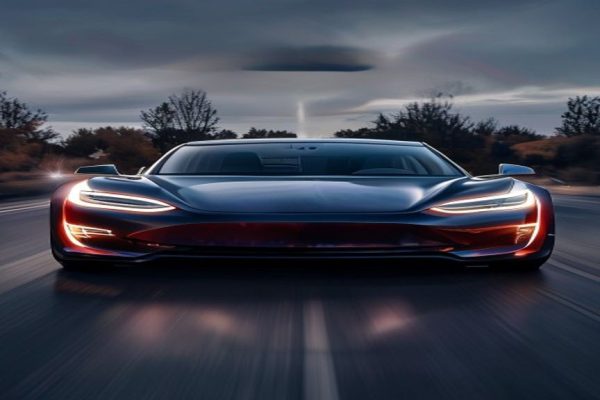
Image prompt: A Tesla Model S driving autonomously on a highway, with a cityscape in the background. The car is equipped with the latest FSD system, and its sensors and cameras are actively scanning the environment to ensure safe and efficient navigation.






Leave a Reply