Tesla’s Autopilot Update: A Key Milestone in Autonomous Driving
Tesla’s announcement has left many in the tech and automotive industries wondering about the implications of the unsupervised Full Self-Driving (FSD) limitation for vehicles equipped with the Hardware 3 (HW3) computer system. For those who may be unfamiliar, Tesla’s HW3 is the third-generation computer system designed for its vehicles, which powers the company’s advanced Autopilot features.
Background and Context: Tesla’s Autopilot Evolution
Tesla’s Autopilot has been continuously improving since its introduction in 2015. The system has evolved from a simple adaptive cruise control and lane-keeping assist to a sophisticated suite of features that enable vehicles to drive autonomously in various scenarios. The HW3 computer system was a significant upgrade, enabling more advanced Autopilot capabilities, including the ability to detect and respond to complex traffic scenarios.
However, despite the advancements, Tesla’s HW3 vehicles are still not capable of unsupervised FSD, which means they require human intervention during certain situations. This limitation has raised questions about the future of Tesla’s Autopilot technology and the company’s vision for autonomous driving.
The Reasons Behind the Limitation
The primary reason for the unsupervised FSD limitation on HW3 vehicles is the complexity of the technology involved. Developing a system that can safely and reliably operate without human intervention in all scenarios is a daunting task, requiring significant advancements in areas like computer vision, machine learning, and sensor fusion.
Tesla’s Autopilot team has made significant progress in these areas, but the company has chosen to prioritize the development of more advanced features, such as the ability to detect and respond to complex scenarios, like construction zones or road closures. These features are critical for enabling Tesla’s vehicles to operate safely and efficiently in real-world environments.
Another reason for the limitation is the need to ensure the safety and reliability of Tesla’s Autopilot system. The company has a strong focus on safety, and any decision to enable unsupervised FSD on HW3 vehicles would require rigorous testing and validation to ensure that the system can operate safely in all scenarios.
Future Implications and Expectations
While the unsupervised FSD limitation on HW3 vehicles may be a setback for some, it’s essential to view this as a stepping stone towards more advanced Autopilot capabilities. Tesla’s continued investment in AI and machine learning research will ultimately lead to more sophisticated features and capabilities.
In the near term, Tesla owners can expect to see further updates to the Autopilot system, including new features and improvements to existing ones. The company’s focus on developing more advanced features will continue to push the boundaries of what is possible with Autopilot, and we can expect to see significant advancements in the coming years.
As the autonomous driving landscape continues to evolve, it’s crucial to remember that Tesla’s Autopilot is not a standalone system but rather a key component of the company’s broader vision for transportation. The company’s commitment to innovation and safety will continue to drive the development of more advanced Autopilot capabilities, and we can expect to see significant progress in the future.
Conclusion: A Bright Future for Tesla’s Autopilot
Tesla’s announcement about the unsupervised FSD limitation on HW3 vehicles is a reminder that the development of autonomous driving technology is a complex and ongoing process. While the limitation may be a setback for some, it’s essential to view this as a stepping stone towards more advanced Autopilot capabilities.
As Tesla continues to invest in AI and machine learning research, we can expect to see significant advancements in the coming years. The company’s commitment to innovation and safety will continue to drive the development of more advanced Autopilot features, and we can expect to see a bright future for Tesla’s Autopilot technology.
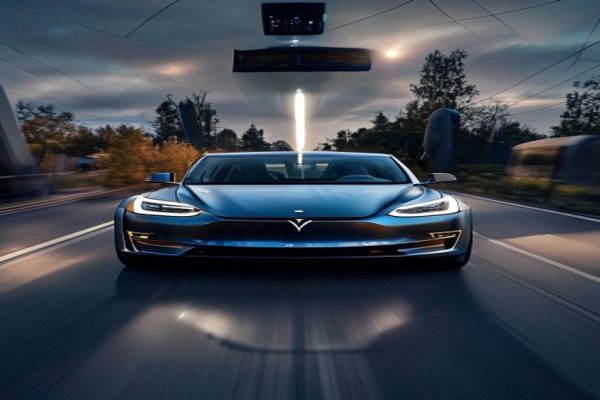
Image Prompt: A futuristic illustration of a Tesla vehicle driving autonomously on a highway, with a subtle cityscape in the background. The vehicle is equipped with the HW3 computer system, and the Autopilot system is engaged, enabling the vehicle to operate safely and efficiently.






Leave a Reply