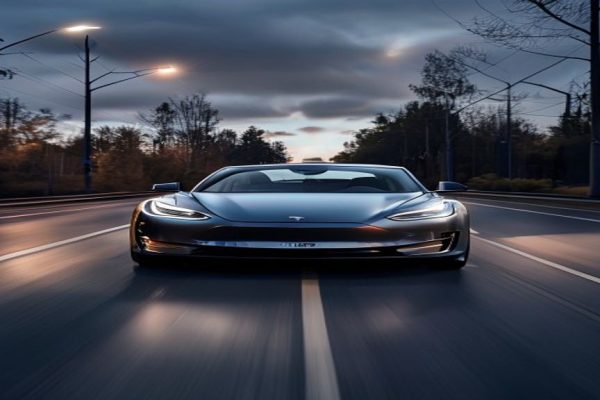
Tesla’s FSD Halt: A Setback for Autonomous Technology?
The recent announcement that Tesla’s cars on HW3 will not be receiving unsupervised Full Self-Driving (FSD) capabilities has left many owners and enthusiasts of the brand disappointed and concerned. The move has sparked a renewed debate about the current state of autonomous technology and its future prospects.
The Background: Tesla’s HW3 and FSD
Tesla’s HW3 (Hardware 3) is the company’s third-generation Autopilot computer hardware. It was designed to provide improved performance and efficiency for the company’s advanced driver-assistance systems (ADAS). FSD, on the other hand, is Tesla’s flagship autonomous driving feature, which enables vehicles to navigate complex roads and scenarios without human intervention.
FSD has been a highly anticipated feature among Tesla enthusiasts, and its development has been closely followed by the industry. However, the company has faced numerous challenges in perfecting the technology, including regulatory hurdles, technical difficulties, and public skepticism.
The Reason Behind the Halt: A Technical Explanation
According to sources, the decision to halt FSD on HW3 is primarily due to technical limitations. The hardware, while capable of processing vast amounts of data, may not be powerful enough to handle the complex computations required for unsupervised FSD. Additionally, the company may be prioritizing the development of more advanced hardware, such as the HW4, which is expected to provide even greater processing capabilities.
It’s worth noting that Tesla has been gradually expanding FSD capabilities to its HW3 vehicles, albeit in a supervised mode. This means that drivers are still required to intervene in certain situations, such as construction zones or complex intersections. The halt of unsupervised FSD on HW3 may be seen as a temporary setback, but it does not necessarily imply a complete abandonment of the technology.
The Future of Autonomous Technology: Implications and Possibilities
The Tesla FSD halt highlights the ongoing challenges and complexities of developing autonomous technology. While some experts argue that the technology is not yet mature enough for widespread adoption, others believe that it has the potential to revolutionize the transportation industry.
According to a report by the International Transport Forum, autonomous vehicles could reduce traffic congestion, lower emissions, and improve road safety. However, the report also notes that significant technical, regulatory, and societal hurdles need to be overcome before the technology can be fully realized.
In the short term, the halt of FSD on HW3 may lead to frustration among Tesla owners who were expecting more advanced autonomous capabilities. However, it may also prompt the company to accelerate the development of more advanced hardware and software, potentially leading to breakthroughs in autonomous technology.
Key Takeaways:
- Tesla’s HW3 vehicles will not receive unsupervised FSD capabilities due to technical limitations.
- The company is prioritizing the development of more advanced hardware, such as HW4.
- The halt of FSD on HW3 may be a temporary setback, but it does not necessarily imply a complete abandonment of the technology.
- The future of autonomous technology remains uncertain, but it has the potential to revolutionize the transportation industry.






Leave a Reply