Tesla’s Full Self-Driving (FSD) Capabilities: A Step Back for Older Models
Tesla’s ambitious journey towards autonomous driving has encountered another hurdle. The electric vehicle giant has announced that it will not be rolling out unsupervised Full Self-Driving (FSD) capabilities to its cars equipped with Hardware 3 (HW3). This decision affects all Tesla models produced before 2021, including the Model 3 and Model Y.
Background and Context
Tesla’s HW3 was designed to support the company’s advanced driver-assistance systems (ADAS) and eventually, its full self-driving capabilities. However, the development of FSD has been a complex and challenging process. While Tesla has made significant progress, the company has faced numerous setbacks and controversies surrounding its autonomous driving technology.
In 2020, Tesla began testing its FSD beta program, which allowed select owners to experience the system’s capabilities on public roads. However, the program was plagued by reports of erratic behavior, including crashes and near-misses. These incidents raised concerns about the safety and reliability of Tesla’s autonomous driving technology.
Reasons Behind the Decision
So, why has Tesla decided to halt the rollout of unsupervised FSD for its HW3-equipped cars? The answer lies in the limitations of the company’s current technology. Tesla’s FSD system relies heavily on a combination of sensors, including cameras, radar, and ultrasonic sensors. However, the HW3 hardware is not powerful enough to process the vast amounts of data required for unsupervised FSD.
In a statement, Tesla acknowledged the limitations of its HW3 hardware and the need for more advanced processing capabilities to support unsupervised FSD. The company plans to focus on upgrading its HW3-equipped cars to the more advanced HW4 hardware, which will enable more robust and reliable autonomous driving capabilities.
Future Implications and Potential Workarounds
The decision to halt unsupervised FSD for HW3-equipped cars may be seen as a setback for Tesla’s autonomous driving ambitions. However, the company remains committed to developing and refining its FSD technology.
Tesla has announced plans to upgrade its HW3-equipped cars to the HW4 hardware over the coming months. This upgrade will not only enable unsupervised FSD but also provide improved safety and performance features.
While the wait may be frustrating for some owners, Tesla’s decision to prioritize the development of its HW4 hardware is a step in the right direction. By focusing on more advanced processing capabilities, the company can ensure that its FSD technology is safe, reliable, and effective.
Key Takeaways
- Tesla has announced that it will not be rolling out unsupervised Full Self-Driving (FSD) capabilities to its cars equipped with Hardware 3 (HW3).
- The decision is due to the limitations of the HW3 hardware, which is not powerful enough to process the vast amounts of data required for unsupervised FSD.
- Tesla plans to focus on upgrading its HW3-equipped cars to the more advanced HW4 hardware, which will enable more robust and reliable autonomous driving capabilities.
- The upgrade will also provide improved safety and performance features, including unsupervised FSD.
Conclusion
Tesla’s decision to halt unsupervised FSD for its HW3-equipped cars may be seen as a setback, but it is a necessary step towards developing more advanced and reliable autonomous driving technology. By prioritizing the development of its HW4 hardware, the company can ensure that its FSD technology is safe, effective, and user-friendly.
The wait may be frustrating for some owners, but the long-term benefits of Tesla’s commitment to autonomous driving are undeniable. As the company continues to push the boundaries of what is possible with its FSD technology, we can expect to see significant improvements in safety, performance, and user experience.
The future of autonomous driving is exciting, and Tesla’s commitment to this technology is a crucial step towards making it a reality.
About the Author
The article was written by Jay Peters, a seasoned journalist with a passion for technology and innovation. With a keen eye for detail and a deep understanding of the tech industry, Jay provides insightful analysis and commentary on the latest developments in autonomous driving and beyond.
Related Articles
* Tesla’s FSD Beta Program: What You Need to Know
* The Future of Autonomous Driving: What to Expect
* Tesla’s HW4 Hardware: What It Means for FSD and Beyond
Image Prompt:
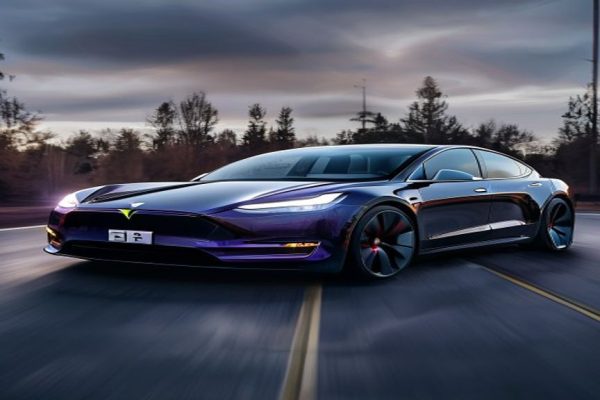
A futuristic image of a Tesla Model 3 driving on a highway, with a cityscape in the background. The car is equipped with the HW4 hardware, and the FSD system is activated, allowing the car to drive autonomously. The image should convey a sense of safety, reliability, and cutting-edge technology. The color palette should be primarily shades of silver and black, with a touch of blue to represent the autonomous driving capabilities.






Leave a Reply