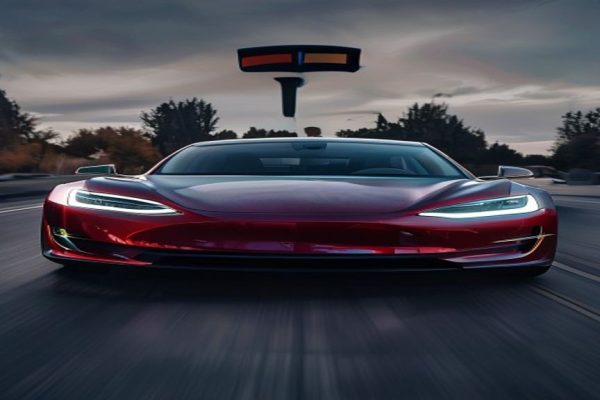
Tesla’s FSD Update: A Reality Check for HW3 Owners
Tesla’s Full Self-Driving (FSD) technology has been a topic of interest and controversy in the automotive world. Recently, Elon Musk, CEO of Tesla, announced that cars equipped with Hardware 3 (HW3) would not be receiving unsupervised FSD. This update has left many HW3 owners wondering what this means for their vehicles and the future of autonomous driving.
The Background of FSD and HW3
FSD is Tesla’s advanced driver-assistance system (ADAS) designed to enable a vehicle to operate autonomously without human intervention. HW3 is the latest version of Tesla’s hardware suite, which includes a range of sensors and computing power necessary for FSD to function. Introduced in 2020, HW3 is designed to provide improved performance, range, and safety compared to its predecessor, HW2.
However, FSD has been plagued by software issues, with many owners reporting instances of the system failing to detect pedestrians, stop signs, or other obstacles. In response to these concerns, Tesla has repeatedly pushed back the release of unsupervised FSD, citing the need for further testing and validation.
The Implications of No Unsupervised FSD for HW3 Owners
For HW3 owners, the lack of unsupervised FSD means that they will not be able to use their vehicles to their full potential. While Tesla’s FSD beta is available for HW3-equipped vehicles, it requires human oversight and is not suitable for long-distance or high-stress driving.
This limitation may be a significant concern for many owners, particularly those who invested in HW3 specifically for its advanced FSD capabilities. As a result, some owners may feel that they have been misled by Tesla’s marketing and that the company has failed to deliver on its promises.
However, it is worth noting that Tesla has always emphasized the importance of caution and oversight when using FSD. In fact, the company has explicitly stated that FSD is an advanced driver-assistance system, not a fully autonomous vehicle. While the lack of unsupervised FSD is undoubtedly disappointing, it does not necessarily mean that HW3 owners are not getting the benefits of FSD.
The Future of Autonomous Driving: What’s Next for Tesla and the Industry?
While the lack of unsupervised FSD for HW3 owners may be a setback, it is not a reflection on the long-term prospects of autonomous driving. In fact, Tesla and other companies continue to make significant strides in this area, with many experts predicting that fully autonomous vehicles will become a reality within the next decade.
However, for Tesla, the path to achieving true autonomy will likely be a long and winding one. The company has faced numerous challenges in developing FSD, from software bugs to regulatory hurdles. As a result, Tesla may need to re-evaluate its approach to FSD and focus on building a more robust and reliable system.
In the meantime, HW3 owners will need to continue using FSD in beta mode, with human oversight. While this may be a compromise, it is a necessary step towards achieving true autonomy. As the industry continues to evolve, we can expect to see significant advancements in FSD and autonomous driving, making it an exciting and dynamic space to watch.
However, for Tesla, the path to achieving true autonomy will likely be a long and winding one. The company has faced numerous challenges in developing FSD, from software bugs to regulatory hurdles. As a result, Tesla may need to re-evaluate its approach to FSD and focus on building a more robust and reliable system.
- Tesla’s FSD update means that HW3 owners will not receive unsupervised FSD.
- The lack of unsupervised FSD is a result of software issues and regulatory hurdles.
- HW3 owners will need to continue using FSD in beta mode, with human oversight.
- The future of autonomous driving remains bright, with many experts predicting that fully autonomous vehicles will become a reality within the next decade.
Conclusion
Tesla’s FSD update may be a disappointment for HW3 owners, but it is not a reflection on the long-term prospects of autonomous driving. As the industry continues to evolve, we can expect to see significant advancements in FSD and autonomous driving, making it an exciting and dynamic space to watch.
For Tesla, the path to achieving true autonomy will likely be a long and winding one. However, with continued investment in R&D and a focus on building a more robust and reliable system, the company may be able to overcome the challenges it has faced and deliver on its promises.






Leave a Reply