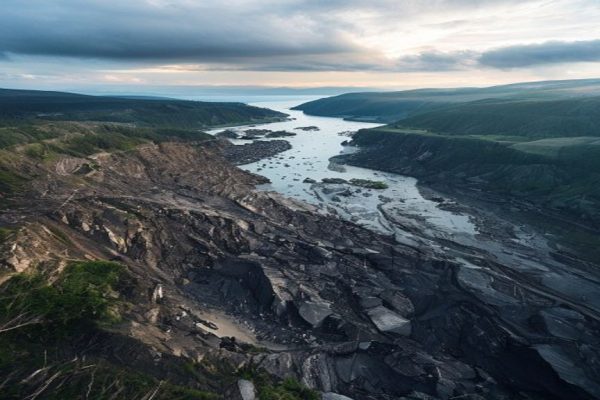
Massive Landslide Strikes Tracy Arm Fjord, Alaska
On the morning of August 10, 2025, a catastrophic landslide struck Alaska’s Tracy Arm fjord, a breathtaking destination renowned for its stunning glaciers and towering mountains. The landslide, triggered by a combination of heavy rainfall and unstable terrain, sent massive amounts of rock and debris tumbling into the fjord, resulting in a 1,578-foot-tall (481-meter-tall) mega-tsunami.
The impact of the landslide was felt across the region, with numerous reports of damaged cruise ships and nearby infrastructure. Several vessels were forced to alter their course, while others were marooned in the fjord, awaiting rescue and repair. The incident has raised significant concerns about the safety of cruise travel in the area and the long-term sustainability of this popular destination.
Landslide Triggers Mega-Tsunami in Tracy Arm Fjord
Tracy Arm Fjord, a picturesque 30-mile-long (48-kilometer-long) inlet, is a favorite among cruise enthusiasts and adventure seekers. However, its breathtaking scenery and unique wildlife come with inherent risks. The landslide, which occurred at the head of the fjord, released an enormous amount of energy, resulting in a massive wave that traveled at speeds of up to 60 mph (97 kph), threatening nearby ships and infrastructure.
Experts believe that the landslide was triggered by a combination of heavy rainfall and unstable terrain. The region has experienced an unusually wet summer, with several inches of rainfall falling in a short period, making the terrain susceptible to landslides. The instability of the terrain was exacerbated by the presence of weak rocks and soil, which were unable to withstand the pressure of the water and gravity.
Environmental Concerns and Future Implications
The landslide has raised significant environmental concerns, with fears of oil spills, contamination of local waterways, and disruption of marine ecosystems. The impact on the fjord’s unique wildlife, including whales, sea lions, and eagles, is still unknown and is being closely monitored by conservationists and scientists.
The incident has also sparked debates about the long-term sustainability of cruise travel in the area. Several cruise lines have expressed concerns about the safety of their passengers and the potential risks associated with traveling in this region. Others have called for increased investment in infrastructure, such as advanced early warning systems and emergency response plans, to mitigate the impact of future landslides.
The incident serves as a stark reminder of the importance of environmental stewardship and responsible tourism practices. As the world’s oceans continue to face unprecedented threats, it is essential that we prioritize the protection of our marine ecosystems and the well-being of those who depend on them.
Cruise Industry Response and Future Precautions
The cruise industry has been quick to respond to the crisis, with several lines offering refunds and compensation to affected passengers. However, the incident has also highlighted the need for increased investment in safety measures and emergency response plans.
Several cruise lines have announced plans to implement advanced early warning systems, which will enable them to detect and respond to potential landslides and tsunamis in real-time. Others have committed to increasing their investment in environmental initiatives, such as reducing waste and pollution, and supporting conservation efforts in the region.
The incident serves as a wake-up call for the cruise industry, highlighting the importance of prioritizing passenger safety and environmental sustainability. As the industry continues to evolve and grow, it is essential that we prioritize responsible practices and invest in the long-term sustainability of our operations.
- The landslide was triggered by a combination of heavy rainfall and unstable terrain.
- The incident has raised significant concerns about the safety of cruise travel in the area.
- The landslide has raised environmental concerns, including the potential for oil spills and contamination of local waterways.
- The incident has sparked debates about the long-term sustainability of cruise travel in the area.
- The cruise industry has responded quickly to the crisis, with several lines offering refunds and compensation to affected passengers.
As the world grapples with the aftermath of this devastating landslide, it is essential that we prioritize the protection of our marine ecosystems and the well-being of those who depend on them. The incident serves as a stark reminder of the importance of environmental stewardship and responsible tourism practices.






Leave a Reply