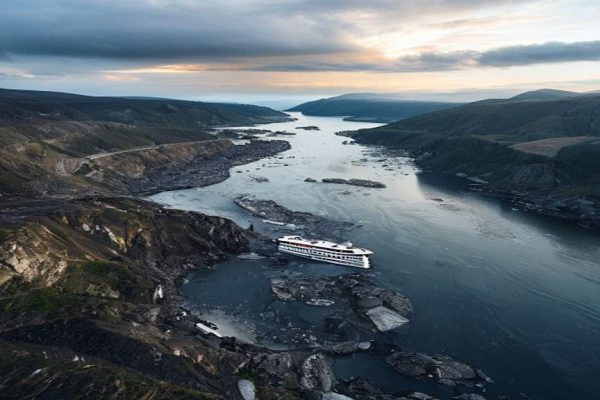
Landslide Rocks Alaska’s Tracy Arm Fjord, Raising Concerns for Cruise Tourism
The morning of August 10, 2025, will be etched in the memories of the local population and cruise industry stakeholders as the day a massive landslide struck Alaska’s Tracy Arm fjord. The remote, pristine destination has been a favorite among cruise lines for its breathtaking scenery and abundant wildlife. The landslide’s impact was enormous, triggering a 1,578-foot-tall (481-meter-tall) mega-tsunami wave that ravaged the area.
Initial reports indicate that the landslide was likely triggered by a combination of heavy rainfall and unstable rock formations in the fjord. The precise cause of the disaster remains under investigation, with experts from the National Park Service and the U.S. Geological Survey (USGS) working tirelessly to determine the exact circumstances surrounding the event.
Impact on Cruise Industry and Local Community
The landslide has sent shockwaves throughout the cruise industry, with several major operators halting their itineraries in the region as a precautionary measure. The affected area is a critical component of many cruise lines’ summer schedules, with ships carrying thousands of passengers and crew members. The sudden loss of this destination will likely result in significant financial losses for the industry, with estimates suggesting that the economic impact could be in the hundreds of millions of dollars.
The local community, reliant on tourism, is also bracing for the consequences of the landslide. Many residents have expressed concerns about the potential long-term effects on their livelihoods, with some fearing that the disaster could have a lasting impact on the regional economy.
Environmental Concerns and Long-Term Implications
The landslide has also raised environmental concerns, with scientists warning of potential damage to the fjord’s delicate ecosystem. The Tracy Arm fjord is home to a diverse array of marine life, including salmon, bears, and whales. The massive wave triggered by the landslide could have disrupted the natural habitats of these species, with potentially devastating consequences for the region’s biodiversity.
As the cleanup efforts and investigations continue, experts are also warning of the long-term implications of the landslide. The fjord’s geology is complex, with unstable rock formations and hidden fault lines. While the immediate impact of the disaster is clear, the potential for future landslides and tsunamis remains a pressing concern.
Response and Recovery Efforts
The National Park Service and local authorities have swiftly mobilized response teams to assist in the recovery efforts. The U.S. Coast Guard has dispatched vessels to the affected area, with rescue teams working to evacuate any stranded passengers and crew members. The Federal Emergency Management Agency (FEMA) has also been deployed to provide support and resources to the affected communities.
As the situation continues to unfold, the international community is watching with bated breath. The landslide serves as a poignant reminder of the power of nature and the importance of responsible tourism practices. In the coming weeks and months, the world will be closely monitoring the recovery efforts and the long-term implications of this disaster.
- The landslide has triggered a 1,578-foot-tall (481-meter-tall) mega-tsunami wave.
- The disaster has halted cruise industry operations in the affected region.
- The local community is bracing for the economic and social consequences of the landslide.
- Environmental concerns have been raised regarding the potential damage to the fjord’s ecosystem.
- The landslide has highlighted the importance of responsible tourism practices.






Leave a Reply